Have feed back, suggestions, or questions? CLICK HERE to Send us a Message.
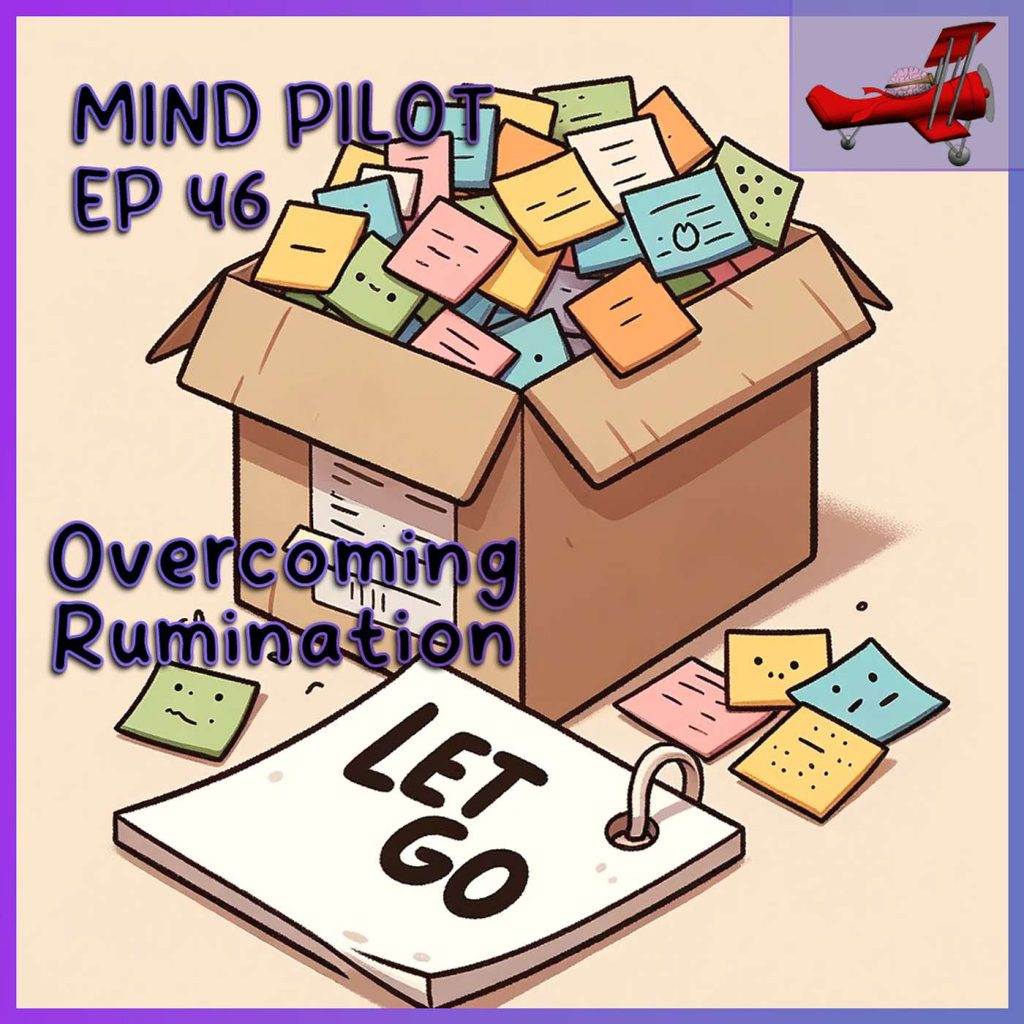
Mind Pilot Episode 46
Join Dr. Jana Price-Sharps on Mind Pilot as she delves deep into the complexities of rumination, a mental trap many of us fall into, especially first responders. Learn how to recognize when your mind gets stuck on an issue and discover practical strategies to break free. Whether it's anxiety over health, the actions of others, or everyday nuisances, Dr. Jana shares invaluable insights and personal stories to help listeners achieve a calmer, more controlled mental state. Don't let past hurts or future fears keep you from living your best life today!
Episode Transcript
Good day. Welcome to Mindpilot. This is Dr. Jana Price Sharps. Today we're going to talk about rumination. And this is a common problem for first responders, but actually, it's a problem that a lot of people struggle with. And what I mean by rumination is your mind, it's like it locks on to something and it won't let it go. And even though you know it's probably not a problem or it's going to be okay, or that something can be done about it, or you're doing what you need to do about it, or even that it's out of your control, your mind won't let it go. And so here's a couple of steps that might be helpful for you. The first one is, and this is probably the most important one: can you do anything about this? If you can't do anything about it, if you have no control over it, then you need to either in your mind put it in a box, in your real life put it in a box, but somehow you need to let your mind know that this is not something you're going to waste your mental energy on. And when you think about over your lifetime, and I've thought about this many times in my own lifetime, how much mental energy I've expended on things that I had no say so over that were happening, and they were beyond my control. That ranges from the very long red light to the people that are driving in front of you stopped at the green light for no apparent reason, to what is happening happening politically in the world. Now, sometimes there are some things that you can do. Maybe you take a different road next time, maybe you'll leave a little bit earlier so you're not stressed about being late, whatever. But at the end of the day, figure out how much of this is under your control. And if none of it is under control, figure out how you get that off your plate. And again, I use a box, I will put it on a sticky note, I put it in that box, and I go, you're in there. You're no longer my problem. I can't do anything about you. You know, if you're a person who prays, then pray over it, but realize that it is contained. If you are ruminating about somebody else's behavior, which is a common one, realize that unless they're really young, like a two-year-old, you don't have any control over another adult's behavior, unless maybe you're working as a first responder and you arrest them or something like that. But in your personal life, you can't make your spouse, your significant other do anything. And that's a really tough one for people because they will often say, if only my husband would do this, or if only my wife, or if only my spouse or significant other would do this, then everything would be okay. And I've told them a hundred times and they're still not doing it. At the end of the day, if you've told this person a bunch of times and they're still not doing it, then you have to take that step back and ask yourself, okay, is it worth a major breakup or fight or something to deal with this? Because at the end of the day, they may still not do it. You can do everything you can do on your part, and they still not do it. Whatever it is. Could be washing the dishes, I don't know, it could be picking up their laundry. At the end of the day, they are choosing not to do that for some reason, whatever the reason. You can talk to them, you can explain to them how it makes you feel, you can explain to them why it would be a good idea to do this or that or the other. But at the end of the day, it is going to be up to them whether they do it. And a lot of people have incredible angst and will say things over and over about, yes, but I've told him or her that this is the way they need to do this, and they're not doing what I tell them to do. This is hard, but they don't have to. They get to choose what they're going to do. You get to choose your reaction to what they do. So people will say, Well, do I just give up? Well, it depends on the situation. But sometimes you have to let things go. And you have to just go, you know what? They're gonna do what they're gonna do. I don't approve of it, but I need to choose how I'm gonna react or what I'm gonna do. I'll give you a funny example. And this is a common, common one. I've been married to the same amazing man for 33 years. And I load the dishwasher one way, and he loads the dishwasher a different way. Now, if you asked either one of us, we would be absolutely sure that we are correct in the way we load the dishwasher. So we can either argue over it, we've actually kind of made a game out of it. So when I put a dish in, if I can't stand it, I rearrange the dishwasher. And he does the exact same thing. Whoever puts the last dish in and puts the soap in, they run it the way they want it run. Okay. And we've made a game out of it and we joke about it. But we've also been married a long time. There's a lot of things that people get really kind of twisted up about that are just not worth it. If he folds the clothes in a different way than you want him to fold the clothes, or she folds the clothes incorrectly in your mind, or the refrigerator isn't right, or whatever, does it really matter? And that's one of the ways to get out of rumination. Does this really matter? Does it matter that somebody said something that hurt your feelings four years ago? You know, is going over it and over it and over it going to make it better? If not, start working with your brain on ways to let go of old things. And there's some meditations and exercises, and we may do some of these on the podcast in the future, but realize it's your problem, not theirs. They don't have to do what you tell them to do. Let go. If it's something you can't live with, then leave them. I'm not a big fan of divorce. I'm not saying just go divorce somebody if they don't do what you tell them to do. But if it's something very major and they're not going to do it, then you have a choice. You either figure out, can I live with this? Or do I need to walk away? And that's really where it's at, because you can't make anybody do anything. And sometimes that's hard with our friends. We watch them struggle, we watch them get into relationships that we know or believe we know that are going to be disastrous, and and we want to start fixing it. And the reality is they get to make those choices. You can give them feedback, but they may not take the feedback. Another one that people will ruminate is about medical stuff. You know, I've had a lot of first responders, they have panic attacks. And panic attacks for many people feel like a heart attack. And so then they start going, oh my God, I'm having a heart attack. What am I going to do? Oh my gosh, here's a big one. And they go in and they get checked out, which is exactly what you should do. If you're having something that you don't know if it's a heart attack or not, go get checked out. Absolutely. Go get medically evaluated. But then when the medical doctors come back and say, no, it wasn't a heart attack, then you have to take that step back and go, okay, adrenaline and cortisol, when it's released over a long period of time, which is what first responders have, and sometimes you add some energy drinks or some coffee, and on top of that, you have a bad call and suddenly you're having a panic attack. It's too much stress over too long a period of time. So you need to figure out a way to de-stress. You need to figure out how to cool your system down rather than obsessing that maybe the doctors don't know what they're talking about, which I guess is possible in some cases, but realize that there's a lot of moving parts in your body and they create different physical states. So sometimes people will go on the internet and guilty as charged, I've done the same thing, and you start looking up all the medical stuff, and then you have yourself convinced in about 30 seconds that you're dying of 17 different things. Okay. So if you're concerned about your health, go to the doctor, get a overall checkup, and get your blood drawn, do what you need to do, but then at the end of the day, go, you know what? I'm gonna live my life. I'm gonna focus on what's important for me. I'm gonna focus on what I want to do, but not of what I'm afraid of. You see, rumination is all about fear. And a lot of times it's unsubstantiated fear that is not based on the um evidence. It's based on just emotional fear. So my suggestion is, and I'm a big fan of three by five cards. If you've listened to me, you know this get a few three by five cards and write down some statements that you can say to yourself. Carry a few of them in your wallet or your purse or backpack or whatever. And those statements should be statements that help unlock your mind. So for instance, you, if you're worried about medical, you could say, you know what, I just was fully evaluated, I'm okay. If I'm having some symptoms and they get too bad, I will go take care of it. I'll go to a medical facility. But in the meantime, I'm gonna focus my mind on what's going right in my life and where I want to head in my life and what's important to me in my life. I'm not gonna waste a lot of mental energy worrying about what if this or that or the other. Because you can literally talk yourself into being sick. You know, the mind is a very, very powerful, very powerful thing. And so you have to be very careful where you're allowing it to go. And a lot of people don't realize that they have the say-so over their own brain. They don't realize that they can basically have this kind of discussion with the brain. Brain, I know you want to focus on this right now, but this isn't in our best interest. So we are gonna go focus on something that we enjoy or something that's good or happy or useful. We're not gonna focus on this anymore. We've already spent an hour on the internet deciding we're dying of 17 different things. We've already had a medical evaluation, we're doing just fine. Now we're gonna go hit some golf balls. Okay, take your brain, just like you would if you had a two-year-old that was running for the bleach bottle because it's brightly colored, you pick them up and you move them to a different part of the room and you show them something bright and shiny. The part of your brain that obsesses is that part of the brain that is very impulsive and will just go down rabbit holes. You're gonna have to literally kind of pick up your brain and move it to a different area and say, okay, look, this is pretty and shiny. We're gonna focus on this. So again, are you ruminating about things? Don't waste that mental energy. Figure out either how to close it out, how to put it in a box because you can't control it, or how to let go of it, or how to distract your brain. Don't waste the energy because rumination very often wipes people out, and now they're mentally exhausted, and now they're not sleeping because they're full of adrenaline and cortisol, and they haven't gotten anything accomplished. Thank you for joining us today. This is Dr. Jana Price Sharps and MindPilot.