Have feed back, suggestions, or questions? CLICK HERE to Send us a Message.
Mind Pilot Episode 90
What happens when a command-presence mindset meets a strong-willed partner at home? In this episode of Mind Pilot, Dr. Jana Price-Sharps addresses the unique friction that occurs when two "Type-A" personalities share a life.
For first responders and veterans, "winning" is often a survival mechanism—but applying that same urgency to household chores can be disastrous for a relationship. Dr. Jana breaks down why you are hard-wired to win, why it’s okay for your spouse to have a different opinion, and how to shift your goal from "winning the argument" to "resolving the issue." Tune in for practical advice on how to navigate the small battles—like the dishwasher and toothpaste—so you don't lose the war for your marriage.
Topics Covered
- Leave command presence at work: Giving orders works on the job, but it doesn't translate to a healthy partnership.
- Shift from winning to resolving: Winning the skirmish often means losing the war; focus on the solution, not the victory.
- Accept different opinions: Unless it is a life-or-death scenario, it is okay for your partner to do things differently.
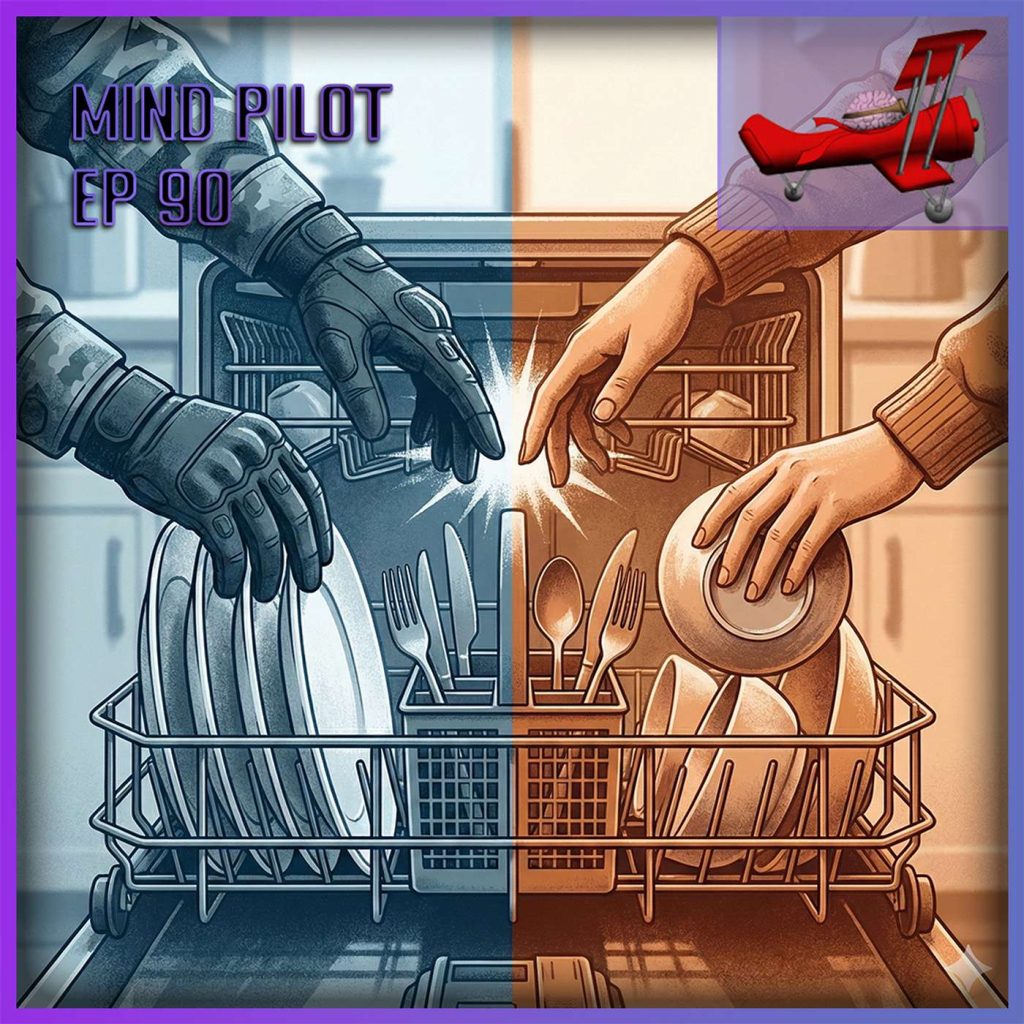
- Gamify the small stuff: Turn petty irritations—like how to load the dishwasher—into a playful dynamic rather than a fight.
- Don't communicate while angry: You cannot resolve issues when you are heated; take a break to avoid unnecessary power struggles.
Episode Transcript
Good day. This is Dr. Jana Price-Sharps from MindPilot. Today we're going to talk about how best to handle people that are also very type A. And I say also because most of you who listen to this podcast are probably type A, meaning you're very direct, you're very maybe opinionated, you tend to uh communicate in orders. And I know that isn't all just type A, but um you're very assertive in your beliefs or what you want done. And you know, in your job, that's the way you communicate at work. You know, if you're uh a police officer, you don't say, would you mind sitting down? And uh I'm gonna put these handcuffs on you? You know, if you're working in the fire service, you're not saying, Oh, here, come over here, you know, you're not talking to a coworker, you need to put that on on the, you know, rig or whatever. You're giving orders most of the day. So what happens when you come home and you're married or in a long-term relationship with somebody else that has a job like that? Maybe they're a teacher and maybe they're used to giving directives all day. So, what do you do with that? How do you communicate with it not being about who's going to win? Because a lot of times when you get two type A people in a long-term relationship, then the communication is often about who's going to win, who is going to take this over and be right, who is going to get the last word. And you know, I tell people, you might win the the uh skirmish, but you're gonna lose the war, so to speak. You know, if if you keep doing that, both of you, then eventually you're not gonna want to talk to each other because it always ends up being this big argument. So I'm gonna say something that's almost blasphemous to people that are first responders, but hear me out before you turn off the podcast. Sometimes it's okay that somebody has a different opinion than you do. Oh, I know, I know, hang on. If it's life or death, it's a different situation. But whether or not you buy this toothpaste or that toothpaste, how the toilet roll goes on the little spindle, how the dishwasher is loaded. I want you to take that step back and ask yourself, does this really matter? Is this really that big a problem? Or is it just something that's kind of annoying and I can just let it go? Okay. I have a couple that I worked with years ago, and they just hated how the other person put the toilet paper on the spindle. They just, it was such a big deal to them. And so uh they ended up resolving it by, and I know this sounds nutty, but hang in there, that every time they use the toilet, they changed it around. And then the next time the other person used the toilet, they changed it around. I'm like, do what you gotta do. If that's so meaningful for you and it's meaningful to the other person, who cares? My husband and I have been married over 32 years, and we are both so type A. And oh my gosh, the first five years were just an interesting cacophony of irritation. But I load the dishwasher one way, he loads the dishwasher the other way, and it was just so damned irritating. If he would just do what I wanted him to do, then everything would be fine, and I'm sure he felt the exact same way. So now we kind of make a game out of it. I will load dishes in the dishwasher and rearrange what he put in. And I don't do it intentionally, I just can't stand it. I'm like, no, if that bowl is there, then it's gonna, you know. And he does the same thing to me because he is looking for maximum loading in the dishwasher. I'm looking at are things gonna actually get clean. And so whoever puts in the last dish wins. Talk about people who want to do the dishes, because whoever puts in that last dish gets to decide how the dishwasher is loaded. And we laugh about it. We don't get mad about it, we don't argue about it anymore. We haven't argued about it for like 25 years. When we kind of figured it out, this is just ridiculous, whatever, it doesn't matter. So now it's kind of like a game. But you need to really think about that if you're married to somebody who's also very opinionated. How can you make a little bit of a game out of it? Or maybe one roll of toilet paper goes this way, and the next time you get your way. I don't know. But you're gonna have to figure out some way of not getting mad about it, being but being able to work it through with the other person. And that's tough because especially you first responders or veterans, you were in jobs where you had to win. And if you didn't win, people died. And so that means in your mind, you're very hardwired now that you have to win. And it becomes it feels very urgent that you win. But is it really urgent about how they load the dishwasher? I had one guy, I asked him that, and he goes, Yes, yes, Jenna, you don't understand. It is urgent. And I said, Okay, but is it worth your marriage? Probably not. All right. And so I told him what my husband and I do, Matthew and I do. And so you really have to think about how important is this to you? And how can you have a discussion with your significant other about it? Don't do it while you're mad. People don't discuss things well when they're angry. And one of the things I've noticed is people want that conversation to continue. I'm like, take a break. You need to take a break because whatever's gonna come out of your mouth, because you've gone from zero to a thousand, it's not gonna be good. So you need to walk away. You need to take that break and think about how I can move this conversation forward rather than staying in this power struggle. Because power struggles really shouldn't be part of marriage or relationships. I guess that there's power struggles out there in the world. I get that. But it really shouldn't be in your relationship. It should be about resolving, not about winning, but about resolving. There's no life or death going on here, generally. Now, if it's a life or death situation, feel free. You know, do what you gotta do. But if it's about the small things, then maybe the two of you can make a plan together. Sit down and figure out what will work for both of you. Don't do that when you're angry, but figure out a solution for each thing. Think about that marital plate, right? All the things that are on that marital plate. And some of them may be big things, some of them may be small things, some of them may have to do with children or finances or sex or something like that. But both of you have to be part of that solution and talk about how you can work together because you're much stronger together than you are fighting with each other. I know that's out of the comfort zone for many of you. I get that. But you'll have a much better relationship at home if you can take that step back and go, okay, how can we work together to resolve this? And I would encourage you, when you're not mad, to talk to your spouse about that as well. Because if you're married to somebody type A, they need to be on board with resolution rather than winning as well. Okay? Have that conversation because you deserve to have a happy life. You deserve to wake up happy in the morning. Little changes in life lead to happiness. Do the a little bit of work at a little bit of time, and you're gonna start feeling better. It's worth it. It is worth it. So you have a wonderful day. Thank you for joining us at Mind MindPilot. Take care of yourself.