Have feed back, suggestions, or questions? CLICK HERE to Send us a Message.
Mind Pilot Episode 17
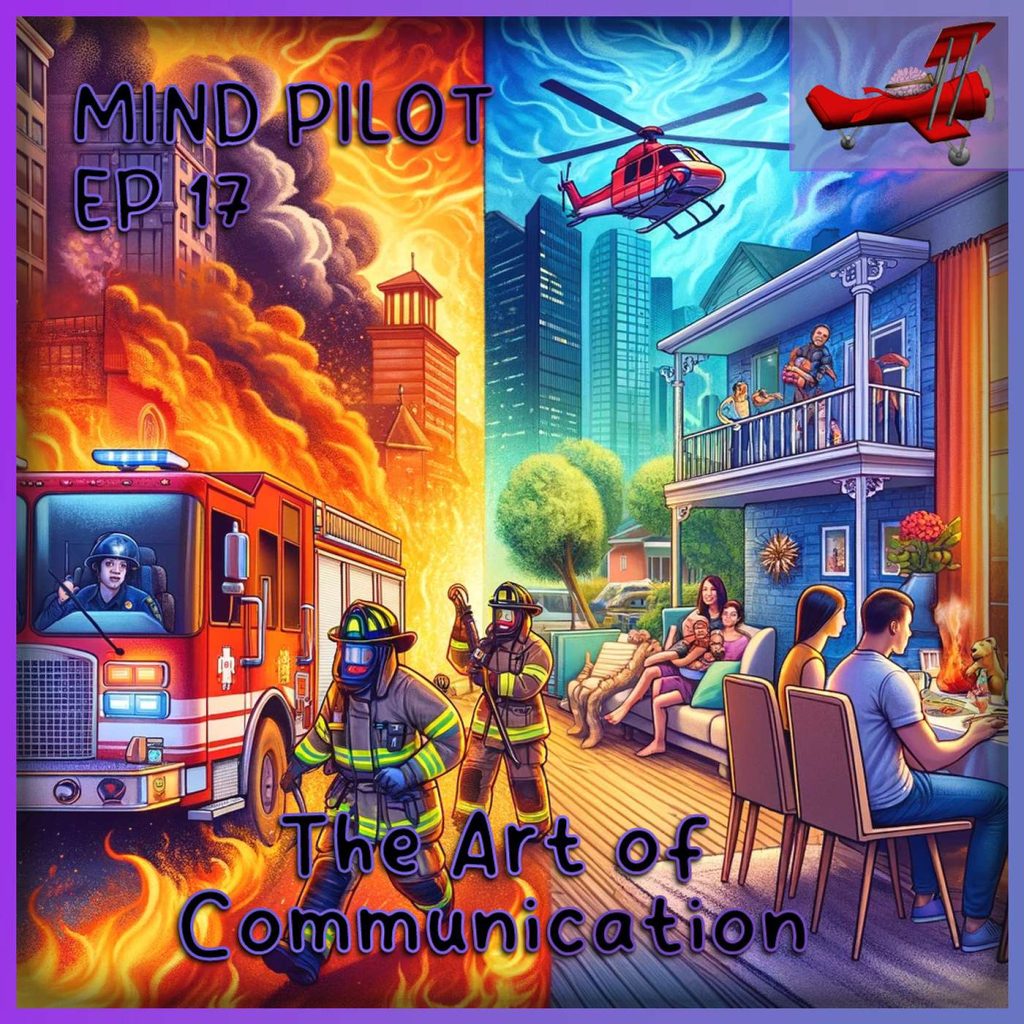
Join Dr. Jana Sharps in this insightful episode of Mind Pilot, where she delves into the nuanced differences between workplace communication and our interactions at home—especially as a first responder. Discover the unique challenges faced when transitioning from a high-stakes, adrenaline-fueled environment to the civilian sphere of family life. Dr. Sharps offers practical advice on modifying communication styles, understanding the impact of our words, and adopting the "5 to 1" rule for a happier, more harmonious home life. Whether you're a seasoned professional or striving for better personal relationships, this episode will guide you towards more mindful and effective communication strategies. Tune in to learn how to prevent work habits from dominating your home interactions and ensure that your off-duty life is as rewarding as your career.
Topics Covered:
- COMMUNICATION STYLES: Exploring the stark contrasts between direct, assertive communication in high-pressure jobs and the softer, more polite dialogue expected in civilian life.
- HOME VS. WORK: Analyzing the challenges first responders face when switching from a commanding work tone to a more nurturing home environment.
- RELATIONSHIP STRATEGIES: Offering actionable tips for improving family communication using the "5 to 1" positivity rule to foster healthier relationships.
- SELF-REFLECTION EXERCISE: Encouraging listeners to calculate and compare the hours spent communicating at work versus at home to better understand their conversational habits and impacts.
Episode Transcript
Welcome to mind. Pilot, This is Dr. Jana Sharps. Today we're going to talk about communication, and this is probably at the foundation of all relationships. And one of the hardest things for people to do and something that most people don't take into account is that most of us are going to communicate differently at work than we communicate at home. Now, that's true for me as a psychologist, right? If I you know, my husband says something and I say, Well, how does that make you feel? He's going to say, Why are you talking to me like that? You know, but I have a pretty mellow job in general. However, if you're a first responder, your communication is very different than your significant others or your spouses. And so I don't think most people take that step back to think about that. So let's explore some different ways that it is different. Let me ask you something at work. If you need a coworker to do something quickly, do you say something along the lines of I say, old boy, do you mind going over and getting that for me? Because that would be very helpful. No, you probably don't say that. You say something like, Don't give me that. Right. And whoever you're saying that to goes and gets it and it works out fine, right? They go get it. You get what you want. There's kind of almost immediate gratification because it gets done. But try that at home. How well does that work? Right. And so the communication at work for first responders is usually very brief, very direct, and often very loud. Maybe not yelling, but very kind of punctuated with, you know, a couple swear words and a very intense tone. And part of that is adrenaline. When you look at people that are highly adrenalized, they're going to talk much more aggressively. They're going to be much more direct. They're much more likely to get angry or irritated with small things. And, you know, the likelihood is they're probably more likely to say some snarky things. And so I want you to pay attention for one week, go to work and just pay attention to what how you're saying things and what you're saying to your coworkers. How are you saying that you need help with something or what you would like them to do or what what is important for the day? And then if you can listen to your tone, take his good that your tone is again going to be very direct. It's going to be very assertive or aggressive. And think about how much you cuss because a lot of first responders use like the F-bomb is kind of an adjective noun verb. And, you know, it kind of is half the sentence sometimes. And so really think about your communication style. Then what I want you to do is I want you to think about how well that works at home. Because, remember, unless you're married to another first responder, your significant other or your spouse is a civilian. Likely. Okay. And they they talk very, very differently. What is acceptable in the civilian world is not so acceptable in the first responder world and vice versa. So when they go into I don't know, the grocery store, they very likely say thank you and please to the clerk. Okay. They they may say to their friends, Oh, that would be really nice. Thank you so much for doing that. And if they're male, they may say, hey, thanks, Appreciate that. You know, but it's still there's there's there's a different kind of etiquette in the civilian world. And then you get into the first responder world and a lot of that goes out the door. The problem is, and I really want you to sit down with a calculator and think about this. Think about how many years you've been a first responder. Think about on average, how many hours do you work a week and how much overtime you work. You got to add the overtime in and times how many weeks a year and get a total number of the hours that you have been on at work as a first responder. And then I want you to go back and do the same for how much you've been at home. Do you know I know you're at home sleeping so that doesn't count. The sleeping time doesn't count. But how much time do you spend with your family? 2 hours a night. An hour a night? I don't know. 3 hours a night. How much time are you spending? And then figure out the differences in the numbers. I had one of my guys did this, and I don't remember what it was, but it was like 25000 hours over here and 5000 hours over here or something ridiculous like that. And I said, So that's probably why you talk like a first responder when you get home, because you have a whole lot more experience talking like that than you do at home. And so I really want you to take that step back and think about how am I talking to my spouse? Am I issuing them orders? Probably. And so maybe starting to think about different ways of asking for things. So maybe if you need them to go to this grocery store and pick up something, maybe it goes from, Hey, you better get some bread. We're out of bread. We're always out of bread. How come you never pick up bread to. Hey, honey, when you go to the grocery store, what would you mind picking up some bread? Big difference, right? One is going to get you a very happy response, and the other one is probably going to start a fight, you know, so. But how would you say it at the station or where you work or who you work for? It's probably very direct. And hey, do you guys get bread or did you get those sandwiches or how come the sandwiches aren't here or whatever it may be, you know, So making that transition, taking that step back, taking a deep breath and saying, okay, I need to be nice, I need to calm my voice down. I need to lower my voice, because probably most of you have heard this. Dad or mom. Why do you always yell? You know, like I never yell. Where are you talking about? I'm yelling. I'm never yelling. And they're like, You're yelling right now. No, I'm not. What the hell's the matter with you? And you're wondering what they're talking about. Well, that's because that's the way you talk at work. And so for you, it's not yelling for them again. They're civilians. For them, it is yelling. So really paying attention to that tone. And you can say, well, maybe they should just get used to it. And yeah, okay, that might be a valid point. But do you want to have a happy life or do you want to fight that fight? You know, you might win the battle, but lose the war. You know, how many first responders do you know, and let's be honest that retire and have nobody their families left them. The kids don't speak to them. They're divorced three or four times and they're alone. You don't want to be that person. So there might be some really small things that you can do that begin to change it up. It is amazing what will happen if you text your spouse or significant other and say, Hey, I just want you to know I love you. And again, warn them that you're working on your communication style so they don't think you're having an affair. But it is amazing how much more people are willing to work with you at home when you're nice being nice. And the other caveat to that is, if you can't be nice, shut up, okay? If you don't have anything nice to say, go walk the dog. You know, do not satisfy by that burning desire to say something really sarcastic and snarky because, number one, that hurts people's feelings. Number two, they're not going to work with you as well if you do that. And number three, you're breaking down your marriage or your relationship with that person just a little bit more. Every kind of snarky comment, every kind of sarcastic comment, just I don't know, it's like chipping away at that marital base or that relationship base. And pretty soon you don't have a relationship or that person hates you or they're very resentful of you, or they join in and they're now they're sarcastic back. And both of you can't be in the same room at the same time. And I've seen a lot of couples like that. They can't it's like they can't be within five feet of each other. They start an argument. And that's what happens when people get too hurt over too long a period of time. So really think about how can I say things more nicely because it's going to make your life so much better. And you know what? You deserve a happy life. You deserve happy relationships. You deserve to wake up in the morning and feel good and with a few small changes in life. Most people can get there, but there's some things you probably want to do. And one of them is be nice, because you know what? People will be much more likely to be nice back. Now, I understand that doesn't always work in your job. I understand that. I'm talking about home life. I'm talking about with your children. There is a great guy by the name of Gottman, Dr. Gottman, and he writes a lot of books. He and his wife write a lot of books on marriage. And one of the things he talks about is the 5 to 1 rule. And that's probably going to come up over and over in these podcasts. And the 5 to 1 rule is five. I love you. I hope you had a good day, too. Hey, did you get bread at the store? Right. And he found that inverse of that is when people are headed for a divorce. And a lot of times what I've seen are people are more like 10 to 1, you know, ten. Why haven't you done this? And what are you going to do this? And I can't believe you haven't gotten that done. Two. Oh, yeah. And I love you. Right. So think about that. 5 to 1 rule. I tell you what, it will shift your relationship around. Thank you for getting me a glass of water. I really appreciate dinner. It was so good. Hey, I noticed that you cleaned that area of. That was wonderful. Thank you. Great job. You know, those little things count. Should you have to say thank you for dinner? I hear this all the time. There's a difference between a should and what works. You can get into the shoulds all day, but if you want a happy marriage, if you want a happy relationship, say thank you. Say I love you. Say, hey, you look beautiful today or you look handsome today. Be nice. That's the cardinal rule of marriages and relationships. Be nice. It is amazing how much better things work. And if both of you were nice, you're going to have a great relationship. I hope you have a wonderful day. You deserve to have a wonderful day. Thank you for joining me. I'm Dr. Jana Price-Sharps. This is Mind Pilot. And don't forget to subscribe.