Have feed back, suggestions, or questions? CLICK HERE to Send us a Message.
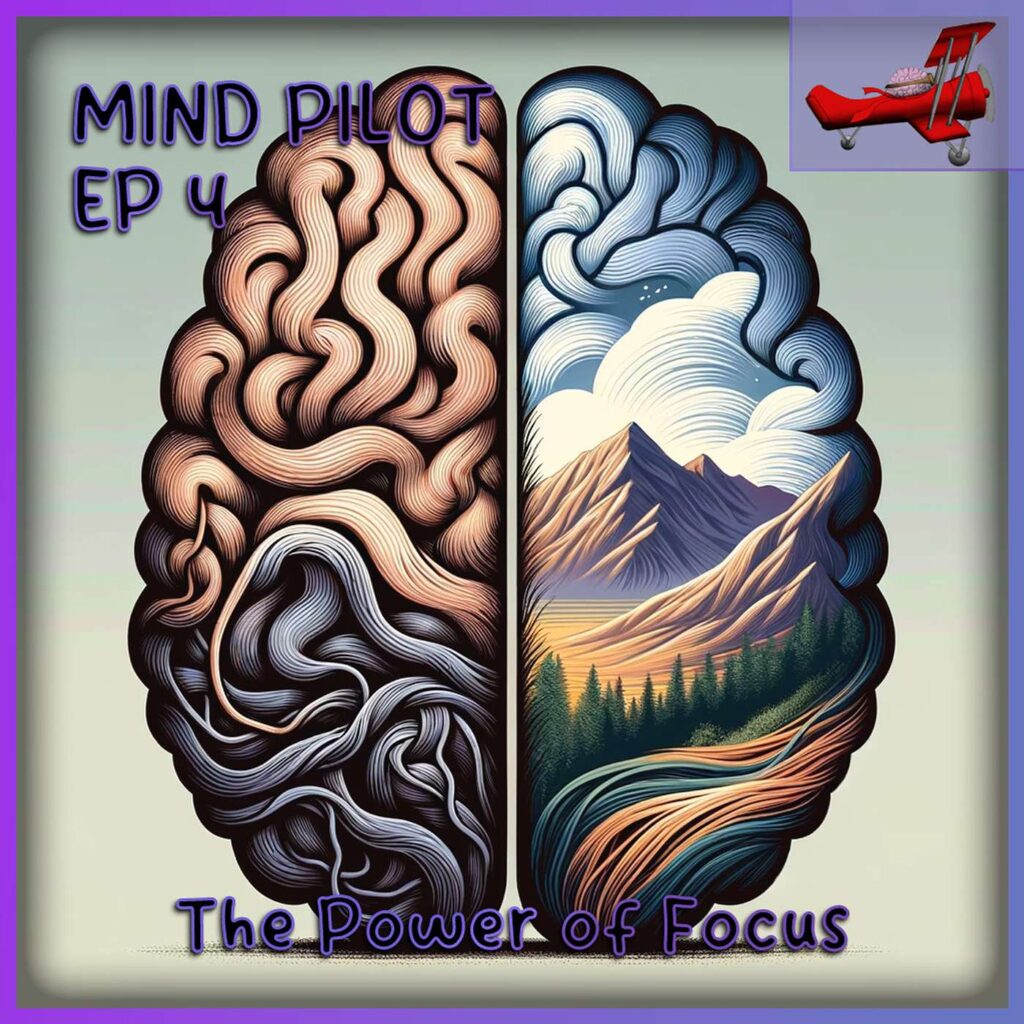
Mind Pilot Episode 4
In this insightful episode of Mind Pilot, Dr. Jana Price-Sharps, a licensed psychologist specializing in trauma and first responder mental health, delves into the transformative technique of changing your mental focus to manage stress and emotional responses. Drawing on historical research and her extensive clinical experience, Dr. Price-Sharps offers practical strategies for those dealing with the aftermath of high-stress situations. Discover how the simple act of seeking out humor and engaging activities can deactivate stress pathways and activate feel-good neurotransmitters, leading to a more balanced and positive state of mind. Whether you're a first responder or anyone facing daily stressors, tune in to learn how to proactively shift your focus and improve your overall mood in just minutes. Subscribe to Mind Pilot for more episodes on harnessing the mind's potential in the face of adversity.
Topics Covered
- CHANGING MENTAL FOCUS: Dr. Jana Price-Sharps discusses strategies to shift attention away from negative experiences, potentially preventing the consolidation of stressful memories and enhancing overall well-being.
- IMPACT OF HUMOR AND DISTRACTION: The episode highlights the benefits of engaging in activities that captivate the mind, from watching comedy to participating in attention-demanding tasks, to disrupt stress cycles and promote positive mental states.
- PHYSIOLOGICAL BENEFITS OF A SHIFTED FOCUS: The discussion includes how laughter and positive distractions can initiate a shift from the sympathetic to the parasympathetic nervous system, reducing stress hormones and increasing the release of feel-good neurotransmitters.
Episode Transcript
Welcome to Mind Pilot. This is Dr. Jana Price-Sharps. I am a licensed psychologist and I work with combat deaths. Of first responders. So this morning, we're going to talk about changing the focus. And what do I mean by changing the focus? I think sometimes people believe that you just have to feel the way you always feel when certain things happen. the way you always feel when certain things happen. And that's actually not true. And that's actually not true. You have a lot of say so over how your mind is processing information and and how you're feeling and and how you're feeling about whatever is happening in your environment. And so if whatever is happening in your environment is not good And so if whatever is happening in your environment is not good and you have a chance Now, and you have a chance Now, I understand if you're a first responder and out on a call, then you kind of have to deal with whatever is going on at that moment. But when you get back to your vehicle, you get back to your station But when you get back to your vehicle, you get back to your station or you get back to someplace that's safe. Really consider changing the focus, Really consider changing the focus, you know, because there's a tendency to go over and over what just happened. you know, because there's a tendency to go over and over what just happened. And so a lot of times people will go back to the station And so a lot of times people will go back to the station or go back to their car and they go over and over what just happened, and especially if it was something awful or something that made them mad, they stay focused on that for quite some time. they stay focused on that for quite some time. There was some interesting research that happened during the London Blitz. I'm sure most of you are familiar with Pavlov and his dogs, but he did some other research for some particularly nice research, but it was informative research. He did research on dogs and he looked at what would happen if they were stressed and how they would react. And then the ones that reacted really heavily And then the ones that reacted really heavily to the stress or very anxiety based during this stressed to the stress or very anxiety based during the stress, he would actually anesthetize them for a little bit. And then right after the event and then he'd bring them back out of anesthesia and they were fine. They were no longer stressed. So they took that research in Europe and during the London blitz, when people were shell shocked, people would, you know, come into the hospital. people would, you know, come into the hospital. And what they do is they would anesthetize them for short And what they do is they anesthetize them for short periods of time periods of time and then they'd bring them back out of the anesthesia and then they bring them back out of the anesthesia. and they were doing okay. And they were doing okay. They were no longer were traumatized and they were fine. And I don't know this, but my best guess, based on what I know about cognitive And I don't know this, but my best guess, based on what I know about cognitive psychology, is it probably interrupted the consolidation of the memory. And so these people would go through all this horrific stuff, And so these people would go through all this horrific stuff, get anesthetized to come back out of it. get anesthetized, come back out of it, and they were fine long term. And they were fine long term. So I'm not saying go and anesthetize yourselves. So I'm not saying go and anesthetize yourselves as well. Not what I'm saying. But what I am saying is when we go over and over and over events, it creates much stronger brain traces, and other words, much stronger pathways back to that memory. in other words, much stronger pathways back to that memory. And so if you can distract your mind after something like that, And so if you can distract your mind after something like that, it may very well be helpful. it may very well be helpful. And I have seen this time and time again working with patients And I have seen this time and time again working with patients that if they can go that if they can go and watch something funny, if they can go do something that requires their attention, that they can't go back and think about the event, if they can let their brain calm down. If they can let their brain calm down, a lot of times they can go back and think A lot of times they can go back and think about the event and kind of process through it and get some closure with it. But going over and over it at- at the moment and what I have seen is it tends to cause more problems. So if you can think about changing the focus, what can you do? So if you can think about changing the focus, what can you do If you've had a bad day, what can you do? if you've had a bad day? What can you do? If you've had a bad call? What can you do when you're in a really bad mood? What can you do to change your focus? One of my favorites is comedy. I tell people, you know, have, you know, some comedy apps on your phone. One that I like is dry bar comedy, but there's a lot of them out there. Go on YouTube. Go on YouTube. There's, you know, thousands of of funny videos or great stand up comedians funny videos or great stand up comedians and and just take 10 minutes out of your life and refocus your brain. and and just take 10 minutes out of your life and refocus your brain. If you refocus on things that are funny or beautiful or fun, If you refocus on things that are funny or beautiful or fun, what ends up happening is your brain is going to react to that. LAUGHTER often will start to shut down the sympathetic LAUGHTER often will start to shut down the sympathetic nervous system, which is your fight or flight nervous system, which releases adrenaline and and cortisol. which releases adrenaline and and cortisol. And it will start to turn on your parasympathetic nervous system. And that's what releases serotonin and dopamine and GABA and all the really feeling feeling good kind of neurotransmitters and endorphins as well. So if you can begin to use your external environment to begin to shift to begin to shift your mood and your focus, you're going to feel a lot better. your mood and your focus, you're going to feel a lot better. And it's amazing. It can take 3 to 5 minutes. But if you'll do it, if you can do that on a regular basis, It can take 3 to 5 minutes, but if you'll do it, you're going to find that when you come home after a long shift, It can take 3 to 5 minutes, but if you'll do it, you're going to be in a much better mood than if you just allow yourself to heat up more and more and more and more with adrenaline. you're going to be in a much better mood than if you just allow yourself Then by the time you get home or back to the station, you're really angry. You're very amped. Now you're not going to sleep. Now, you may be very short tempered with people, You're very amped. Now you're not going to sleep. and that causes even more stress, which heats you up more, ends up being a positive feedback loop, which means it feeds into itself. and that causes even more stress, which eats you up more, This leads to this. Which leads to this. Which leads back to this. And so think about just adding in a few fun things Which leads back to this. some comedy, some humor, some good things. And so think about just adding in a few fun things And you're you will be amazed at how well your mind will change focus if you work with it. And you're you will be amazed at how And overall, you're going to feel better if you take the time to do that well your mind will change focus if you work with it. 3 to 5 minutes. It can make all the difference in the rest of your day. I hope you have a wonderful day. Thank you for everything, all of you do. This is Dr. Jana Price-Sharps form Mind Pilot. I hope you subscribe and take care and have a great day. Thank you for everything. All of you do. This is Dr. Jana Price-Sharps from Mind Pilot I hope you subscribe and take care and have a great day.