Have feed back, suggestions, or questions? CLICK HERE to Send us a Message.
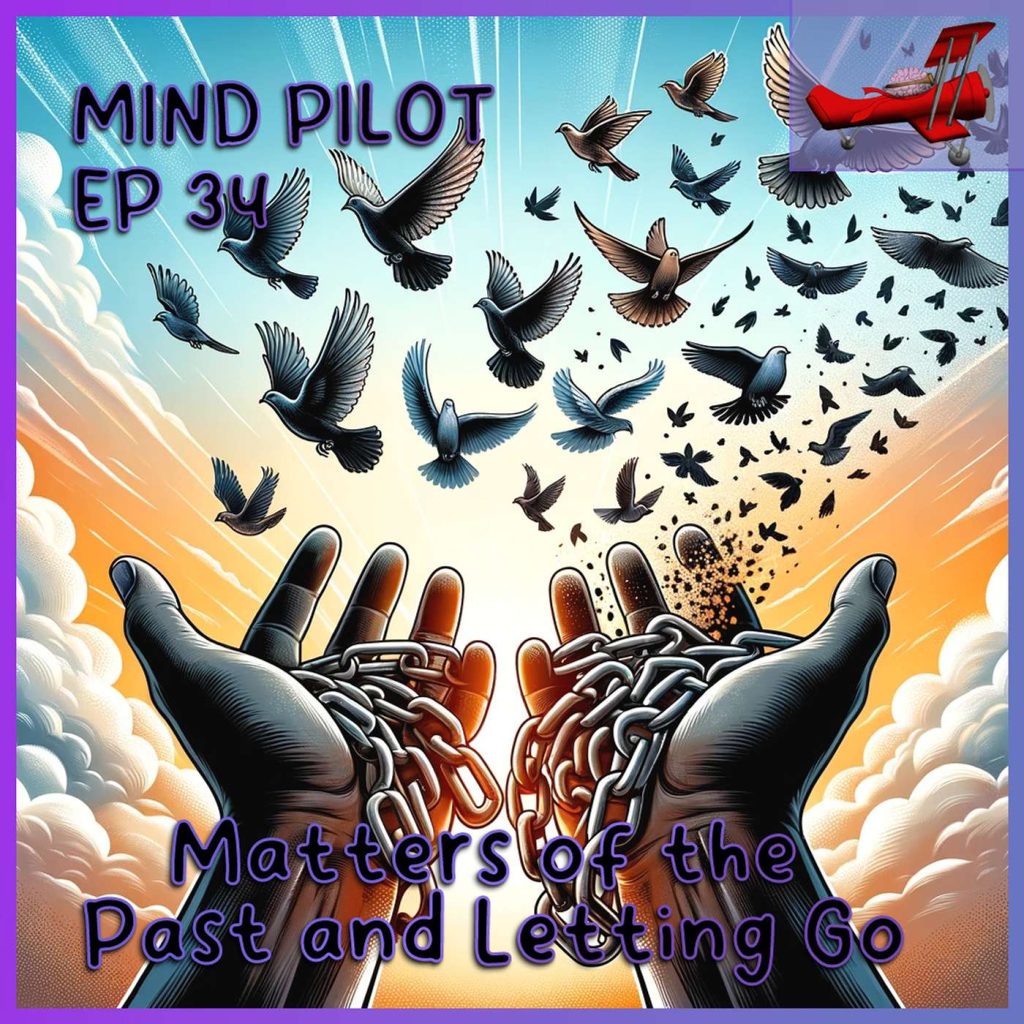
Mind Pilot Episode 34 : Letting it Go
Join Dr. Jana Price-Sharp on Mind Pilot for a transformative journey into the art of letting go. In this episode, Dr. Price-Sharp delves deep into why releasing the grip on past hurts and resentments is essential for our mental health. From examining the roots of our emotional attachments to offering practical exercises like the impactful 'burning ceremony,' she guides us through the intricate process of emotional decluttering. If you find yourself stuck in the why's of life's unfairness or trapped in a cycle of toxic memories, this episode will empower you to shift perspective from holding onto pain as a treasure, to releasing it as poison. It's time to discover the freedom in forgiveness, for the sake of your own well-being. Whether it's a past relationship wound or self-directed anger, learn to let go, not for others, but for the peace and progression of your own life. Don't miss these essential insights—tune in to start your journey towards mental liberation.
Topics Covered:
- IDENTIFYING EMOTIONAL BURDENS: Explore the importance of recognizing what past hurts and resentments you're holding onto, and the impact they have on your life.
- THE LETTING GO EXERCISE: Discover the powerful 'burning ceremony' method, a practical exercise used to help individuals in drug and alcohol treatment release their emotional attachments.
- THE PSYCHOLOGY OF ATTACHMENT: Understand the reasons behind why we cling to negative memories and how they can act as barriers to our emotional well-being.
- MOVING FORWARD: Learn strategies for releasing toxic emotions, the power of choosing to let go, and how it can lead to personal growth and mental freedom.
Episode Transcript
Thanks for joining us. This is Dr. Jana Price Sharps, a Mindpilot. Today we're going to talk about letting go. And this sounds so easy, but it's not particularly easy depending on what you're holding on to. So what do I mean by letting go? Well, letting go could be a number of different things. It could be understanding that you're not in charge of other people's paths in life, that they have their own life and they're going to make their own decisions and you're not in charge of that. It could mean that you feel like somebody has hurt you in the past and you're holding on to that. It could be old resentments from something that happened years ago. It could be angry that you're in a certain situation in life and you don't feel like that's fair. A lot of people get into this isn't fair. Life isn't fair. Why is this happening to me? The whys are pretty toxic unless it's something that you had control over, and then you can kind of figure out, okay, I've made these decisions, and as a result, I'm here. I need to make different decisions. That's fine. But if uh you're holding on to a resentment about where you're at in life, that might be something that you start that process of letting go. So let's talk about different circumstances and how you let go of them. But the first thing is you have to identify what you're holding on to. You know, are there old insults, things that have happened in the past, situations where somebody's done something to you? Is it something that somebody said? You know, what is it you're holding on to? And I would encourage you to maybe take a journal or just a piece of paper and write down some things that you're holding on to. Years ago, I uh worked in drug and alcohol, and I uh had the the folks in treatment, I gave them three by five cards, and I had them write one thing for each three by five card that they were holding on to. It could be comments that people had made or situations that had happened, and I asked them to come up with 10. And then I said, once they came up with 10 and they had them all written out, I said, okay, we're gonna go outside. And there was an aluminum trash can outside and it was empty. And I said, we're gonna go out and we're gonna burn these. And you're gonna pick one that you're willing to let go of, and you're gonna burn it, and you're gonna watch the smoke dissipate, and as it's dissipating, you're gonna say, okay, I'm now letting go of this. And this is when I started to realize just how much people hold on to things because I thought that was gonna take them like five minutes to figure out which one they're gonna let go of. Oh, no, no. It took like 30 minutes for them to decide which one they were gonna let go of. I'd have guys and they'd be holding their cards and they'd go, okay, I'm gonna let go of this one. And they'd sit it down, they'd go, No, I can't let go of it yet. And so they'd pick it back up and they put another one down, and and they would go through this and over and over and over. And one guy said, I can't let go of any of these. And I said, Well, that means you're holding all those toxins. Do you really want to hold on to all that? And he's like, Oh, no, but it's so hard to let go of these. And I said, I know, I know, just pick one. And it was interesting to watch them light them on fire because even, even when they would get there, they would be like, oh, man, this is hard for me to burn and let go of. And so I want you to ask yourself, why do we hold on to things like that? Like they're jewels, right? You'd think that, you know, they had a precious sapphire or something that they were holding on to and they were like, no, it's mine, you can't have it. It's it's precious. So, but the problem is all those things that we hold on to are impacting our brain often on a daily basis, and often making people very miserable people. They talk about it a lot, they revisit it a lot, they bring it up a lot, and they may even dream about it, and they're stuck. And those things keep us stuck, they keep us stuck in kind of a lock loop. So it's really important to figure out ways of beginning to let go of things. Now, one of the things that it's useful to do is ask yourself, why am I hanging on to those things? Why would I be doing that? Well, sometimes people will hang on to old resentments or anger as kind of a boundary. It's like, nope, I'm never going to allow you to get close to me again because you did this, you did that, you did this. And so they kind of hold it up in front of them like they're holding, I don't know, um, a shield. So nobody can get in, and so they can't get hurt again. So sometimes that's happening. Sometimes uh they want to attack, and so holding on to those things keeps them angry, keeps them hurting. So they it's like they have the mental energy to attack back. Uh sometimes they're holding on to things because they're mad at themselves, and they didn't, in their mind, keep themselves safe. And so they go ahead and keep a hold of it because they want to constantly remind themselves, you didn't do this, you didn't do that, why didn't you keep us safe? You know, and and so they may hold on to it. Sometimes people may just hold on to it because they don't know that they can get rid of it. So I want you to think about all those things that you're holding on to, if there are any. Most people there are. And I want you, instead of seeing them as precious jewels that you should hold on to and kind of hoard, I want you to start seeing them as toxins, right? See them as basically poisoning your system and surrounding your system with this toxic energy or toxic waste for that matter, that is poisoning your mind and your whole system. It takes energy, mental energy to hold on to things that have happened to you in the past. And so it becomes really important to be able to say, you know what? That happened. It was wrong. That person shouldn't have done that. But at this point in my life, I am choosing to move forward. I'm choosing to let go of that. I am choosing to say, okay, what happened happened, and I'm gonna go on with my life, and I'm gonna burn this three by five card in a safe place where you don't start a fire and you let go of it. Don't hold on to toxins that start to poison your entire system. So that's why you want to let go. It's not for the other person, it's for you. But sometimes people hold on to things in relationships. Uh somebody stepped outside of the relationship or said something, did something, and the person holds on to it. And they're really, at least I haven't been able to find any way to say this except bluntly. At some point, you need to either let it go or you need to let that person go. If that person has apologized and that person is making a sincere effort to change and to be faithful, for instance, then you have to let it go. And if you can't, then you need to let them go. Because both of you can't relive old mistakes over and over and over. That person can't go back and change it. If you need to go talk to a therapist and kind of process it with somebody, do that. If you need to write in a journal about it, then burn the journal, do that. If you need to talk to that person, don't keep bringing it up. If you've brought it up, you might have to bring it up a couple of times, but then you're gonna have to let it go with that person because that's gonna keep your relationship stuck. If you're stuck, you need to get yourself unstuck. They're not gonna be able to do it for you. And I see this a lot when people have stepped outside of the relationship. Uh, you know, it's like, well, you did this to me and now you need to fix it. Well, they can't fix it, it's already done. And so there is nothing they can do or say that is going to fix it for you. It is now your responsibility to fix it. And I've had people say, yes, but that's not fair. I get that. But at the end of the day, there really isn't anything they can do. So you're gonna have to decide: am I willing to A, give this person another chance, B, figure out how I can let go of this and see how I can heal, or do I need to cut my losses? And you really need to consider that. You know, sometimes I've I've had people say, well, I want to make them as miserable as they've made me. Two wrongs don't make a right, and they never will, they never have. Don't try it. All it does is make two very angry, miserable people who end up getting divorced and end up battling over kids and using the divorce as a tool to destroy each other. Do not do that. Take a step back and ask yourself, can I be with this person or not? If you can't cut your losses. If you can and you want to try, then you're gonna have to process the grief that comes when somebody betrays you. Now, how do you let go of things? Well, you have to get some kind of closure on it. And that is different for everybody. People get closure in very different ways. Sometimes they need to write numerous letters or one letter or a couple letters that just kind of allows them to say everything that they want to say to that other person. And then burn the letters. Let me make this very clear. Do not give them the letters, do not send the letters. All you're gonna do is rip them up. And yes, I know momentarily that might feel good, but all it's gonna do is now they're gonna even be worse than they are, and you're gonna be worse than you are, and it's going to make things worse. It just is. So burn those letters in a safe place where you don't start fires, but get rid of those letters and allow that smoke to dissipate. Okay. Uh other people need to confront the person and talk it through with the person. If you do that, it you need to be very clear that they can't fix it. You can say, I really need to process this with you. If you do that once or twice, that's fine. It can't go on for years. And boy, I've seen that happen in so many relationships, and that is just toxic. I get the person messed up, I get they hurt you, but you can't keep that alive forever because it's destroying you too. Not only is it destroying them, it's destroying you, and you don't deserve it. So stop that. Figure out a way to get closure. But if you're going to process with um the event with that person, then it needs to look something like this. When you did that, that really hurt me. And I I feel very betrayed, and I'm very scared to ever let you get close to me again because I'm afraid you're gonna do the same thing again. And I know you've apologized and I've accepted your apology, and I know you've said that it'll never happen again. And it's gonna take me a while to learn how to believe that because right now I'm struggling with that. But I want to reconnect with you, but it's gonna be a slow process. So, what are some things that we can do to reconnect with each other uh so that we can begin that process? Now, what I see a lot of people doing is they put GPSs on their significant other's cars, they do um, you know, three six life's 365 so they can monitor where that person is, who they're talking to, who they're on the phone with, what they're text messaging, who they're text messaging. All I can say is if you have to do that, you need to cut your losses. Because truly, if you have to monitor that person to that extent, why are you with them? Don't do that. If if you don't feel like you can trust that person, why are you still there? Now, I know some people have life 365 because people are commuting and they want to make sure that if they break down, they're gonna be okay. Okay, that's fine. But don't do it to spy on the other person because what that does is it just sets it up to be uh a very angry relationship, a very it builds resentment, it builds anger, it builds more hurt, and you already have enough hurt. So if you truly feel like you can't trust this person, you really have to ask yourself, not that person, you have to ask yourself, why are you still there? Why are you still putting yourself in a position to get hurt again? If this has been an ongoing issue, it's probably not going to change. You know, if somebody's stepped outside of a relationship a bunch of times, they're gonna keep doing it. So stop. Get a different life, put the boundaries up and say, no more, I'm not gonna do this anymore. It's okay to walk away if you have to. You can love somebody and not be able to live with them. You can love somebody and not trust them, but you can't be in a relationship with somebody you don't trust over the long haul. You've got to figure out how to begin to develop that trust again. And developing trust is not spying on them 24 hours a day. That does not build trust. It builds even more paranoia. So figure out a way to do it that rebuilds things. You may have to say to them, if it's a one-time thing or something like that, you may need to say to them, I am gonna work on the process of forgiving you and letting this go. But you need to understand, we will never be here again. If this happens again, I will leave. And then you need to leave, though. If it happens again, you don't go, oh, just kidding, I'm gonna stay and be really hateful to you. Don't do that. Okay. Uh you need to set your boundaries and then keep those boundaries. You know, but figure out a way that your brain can begin to let go of things. Maybe it's the three by five cards, maybe it's letters, maybe it's talking to them, maybe it's talking to a therapist, maybe it's talking to clergy, your priest, your pastor, whoever. But figure out a way to get closure. That person cannot go back and change what they've done. They can't do it. So you've got to figure out, A, if you're gonna allow them to be in your life, and B, if you're going to allow them to be in your life, how you're going to truly let it go. Are you mad at yourself? You gotta let that go too. Because holding on to that is very toxic. Did you make a mistake? Join the human race. We have all made mistakes. Every single person, and you go, yeah, but it was a big mistake. Okay. So you made it. What's next? You can't go back and fix the past. You can't do it. So you've got to figure out ways of letting go of whatever has happened. Maybe somebody really hurt you and you can't talk to them. Okay, then write out a letter and burn it. You've got to get closure with it, but you do have to let go of it. If you spend every day thinking about it, it's going to eat holes through you, and you're never going to have a happy life. I remember years and years ago, I had a gal that I was doing crisis counseling, and she was going around doing lectures on how she had been harmed as a kid. And her therapist, well-meaning therapist, but had told her that this was part of her process of recovery. And all it was doing was keeping her suicidal. And I asked her one day, I said, When was the last time that you haven't thought about being abused as a as a child? And she looked at me and kind of a shocked look on her face, and she said, Never. And I said, So you've never had a day that you've been away from your trauma. And she goes, No. I said, How about you have a whole day that you're away from the trauma? And she goes, Can I do that? And I said, Absolutely. And she goes, Really? And I said, Yeah, what do you like to do? And she goes, I don't know. And I said, Have you ever gone hiking? And she said, Well, yeah. I said, Do you like hiking? And she goes, I love hiking. And I said, How about you take a day off from your trauma and you go to take a hike? How about that? And she goes, Really? I could do that. And she goes, But I have three speeches set up this week where I'm talking about my trauma. And I said, Well, it's up to you. And she canceled her speeches and she came back three days later and she goes, Oh my God, that was wonderful. I feel so much better. You don't have to live in the past. You can choose to, but you don't have to. You can begin the process of letting the past go and and start putting your sights on the future. Who do you want to be in a year? Where do you want to be in a year? How do you want to feel in a year? Keep that in front of you and your mind will begin to make it true. The past is the past. Figure out how to get closure and then move on. You have the right to have a happy life and take care of yourself. I hope this was helpful. Have a great day. This is Dr. Jana Price-Sharps with Mindpilot. Don't forget to subscribe.