Have feed back, suggestions, or questions? CLICK HERE to Send us a Message.
Mind Pilot Episode 74
In this episode of Mind Pilot, Dr. Jana Price-Sharps dives deep into the transformative power of visualization. She explains how this powerful tool, rooted in Neuro-Linguistic Programming (NLP), can help you shift your mindset around past traumas, current frustrations, or future anxieties. Learn how to use visualization to intensify positive experiences or diminish negative ones, all while setting clear goals for emotional healing and personal growth. Whether you're looking to release anger, reduce anxiety, or strengthen your confidence, this episode offers practical tips to master visualization and reset your mind’s GPS.
Bullet Points:
- Visualization for Healing: Using visual techniques to address trauma and emotional pain.
- NLP Insights: How Neuro-Linguistic Programming influences visualization methods.
- Goal Setting in Visualizations: Importance of clarity before visualizing.
- Transforming Emotions: Techniques to reduce anxiety or amplify positive feelings.
Episode Transcript
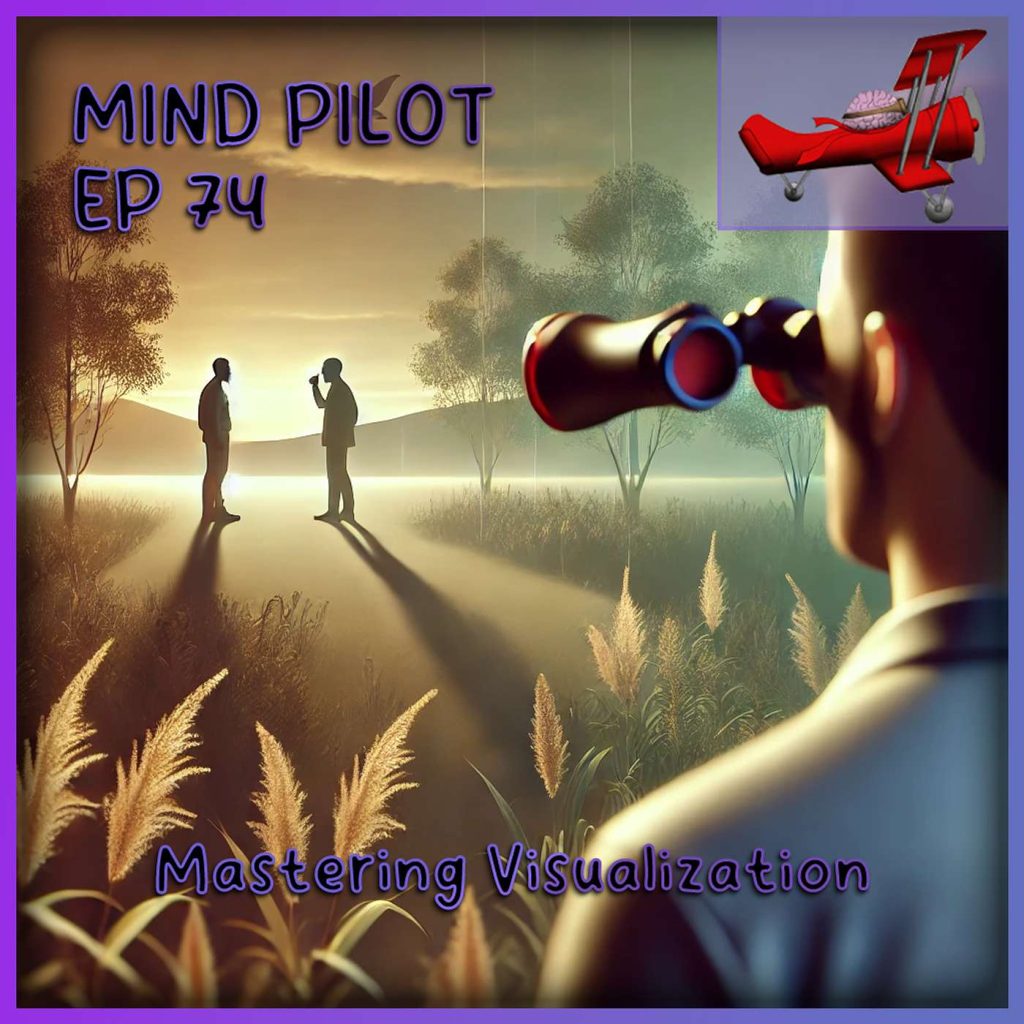
Good day. This is Dr. Jana Price-Sharps with MindPilot. I've talked a lot about visualizations in this podcast, and so I want to teach you some tricks on how to do visualizations, how to create your own, and under what circumstances you might want to use visualizations. Visualizations are very helpful when you're trying to shift your mind, uh, whether it's about a past event, a current event, a future event, if you're still hurting about something, if you're still angry about something, if you were traumatized by something. Visualizations can be very useful. And I learned a lot about visualizations through studying neurolinguistic programming. And so a lot of what I'm going to be talking about in this podcast comes from that NLP tradition. So in a visualization, you can intensify or diminish focus on something. So for instance, let's say you were in an argument with somebody. Well, maybe you're still irritated by the argument. One of the things you can do is in your visualization, you can see yourself in the argument. And then you can look at yourself from some distant vantage point, seeing yourself in that argument. For instance, a really good way of doing that is to look through binoculars or maybe a camera lens so that you see yourself in the argument, but you're not actually back in the argument in your mind. You're seeing yourself in a distance. Now, when you do that, what happens with the brain, it seems anyway, is that the brain begins to understand that this isn't right now immediate. This is somehow, we're somehow distanced from this. Now, another thing that you could do is you could take the camera or the binoculars, and you could adjust the lenses so that you can see the event, and then you slowly change the uh settings, and maybe the event becomes very dim, and now maybe you can't see the event at all. Or maybe it's an event you really want to remember, and maybe you want to sharpen the focus. Maybe you want to increase the light behind the event. So maybe you're in a good conversation, or in a conversation where you're doing a really good job. Maybe you're, I don't know, talking to somebody and it's going really well. Maybe you want to add some light into your visualization. What that's telling the brain is that this is really important. So maybe you can even think about as you're visualizing how your body is changing and how it's feeling really good in a particular circumstance. Um, one of the important things about visualizations is before you create a visualization, you want to have a goal in mind. So is your goal with a visualization to heal? Is your goal to maybe create an additional or strengthen a feeling maybe of confidence? Or is your goal to diminish anxiety or anger? So what is your goal? Maybe it's closure. Maybe you want to close out an old call. So how are you going to do that? Well, if if it's something that's been traumatic or sad or you're so angry about, one of the things that is helpful is to take a step back and figure out why you are sad about that. You know, if if maybe if it's a death, it's obvious why you're sad about it, but maybe there's other things you're sad about, and maybe you know why you're sad about it, and maybe you don't. And so really thinking about, okay, what was it that really bothered me about that? And then how could I fix that? What, how would I like to feel about that now? So if for instance, if you're a first responder and you've gone to a really bad call, maybe that call keeps popping up for you. You're sitting on the couch, I don't know, you're watching, I don't know, some kind of sports event, and suddenly, boop, there it is. And you're like, why am I thinking about this right now? Well, remember, as you've heard me say a number of times in this podcast, that happens when the brain hasn't let go of something. It's bringing it up because it wants your attention. It's asking you, what are we going to do about this? What do we need to do about this? We need to figure out a solution for this. So when it does that, I want you to ask yourself, okay, what is it about that call or that event that bothered me? And if I could feel differently about it, how could I, how would I like to feel? And what are some ways to get me there? So for instance, this is a common visualization that I use uh with first responders. And forgive me if this does not quite fit. Uh, you know, if you don't believe in a higher power or an afterlife, then this isn't going to work necessarily for you, but you can develop something that will give you this relief. So a common one I might say, okay, um, go back into the event and see that person that is maybe injured or killed, see um your higher powers' hands coming down from wherever, and in this case, I'll use heaven, and see those hands coming down, they're huge hands, pick up that person in your mind, visualize yourself being able to pick them up, carry them over, put them into your higher powers' hands, in this case God's hands, see God taking them up to heaven, and then see them in heaven, and now they're made whole. They're healed, they're okay, they're happy, they are completely recovered. And maybe they even wave at you and say, Thank you. Thank you for responding that day, thank you for being there that day. I'm okay. I'm now where I belong. I've gone on ahead of you, and I'm okay. And so maybe uh that's a visualization or kind of visualization I use over and over because you're actually releasing power and responsibility for that person over to something else. So there's other ways of doing that. That's probably the most common uh technique that I use, but finding a way to heal from something. Maybe somebody's really made you angry, maybe you do a visualization where you again you're using that camera. Maybe you, I don't know, take a picture of it and now you see it in a picture, maybe you create a cartoon out of it, maybe you change it, maybe you look at it and put, you know, r ridiculous remarks and bubbles above the above the picture. You know, there's always kind of ways of transforming it. Maybe after you take that picture of the event, maybe you dim it, uh, or maybe you increase the light if something was good, or you dim it, or maybe you dim that one and you recreate what you would like to do in the future and you create that is very intense light so that your brain is very clear, this is not very important, and this is very important. So my recommendation if things keep popping up for you, obviously working with a therapist that is culturally competent to work with first responders is always a good idea. But sometimes it can be very helpful to work with a therapist or a psychologist who you can use them to reduce anxiety, you can reduce them to reduce anger, to heal from past events. But one of the other visualizations that can be very powerful is take a piece of paper or my favorite, the three by five card, and write out what you would like to feel like six months from now. When you wake up in the morning, how do you want to feel? Do you want to feel happy? Do you want to feel satisfied with life? Do you want to feel good about your relationships? Or how would you like to feel? And then make a visualization with you feeling that way. And then do that morning and night. You know, before you go to bed, when you wake up, keep that visualization in front of you because you're really setting your GPS with your mind when you're doing that. So remember that one of the quickest ways to set your your brain's GPS is visualizations. I hope you take the time to create some. We try and include some of them on this podcast, but they're very powerful, and you can really reset your brain and and the direction of your life with visualizations. So I hope you take some time to do that and do it regularly. And if something keeps popping up, remember it is your brain asking you, what are we gonna do about this? Take action. Don't ignore it, don't pretend that it's not popping up. Take action, figure out a plan, take some time, set it aside, and figure out a visualization that will help you move forward. Think about ultimately what would give your brain resolution with this, and do it in a healthy manner, obviously. But if you can use the visualization, it is very powerful. Because remember, you have the right to a happy life, you have the right to be able to set boundaries with people, to wake up in the morning and feel good. You're relevant. You have the right to be happy. Thank you for joining us. This is Dr. Jana Price-Sharps from MindPilot.