Have feed back, suggestions, or questions? CLICK HERE to Send us a Message.
Mind Pilot Episode 86
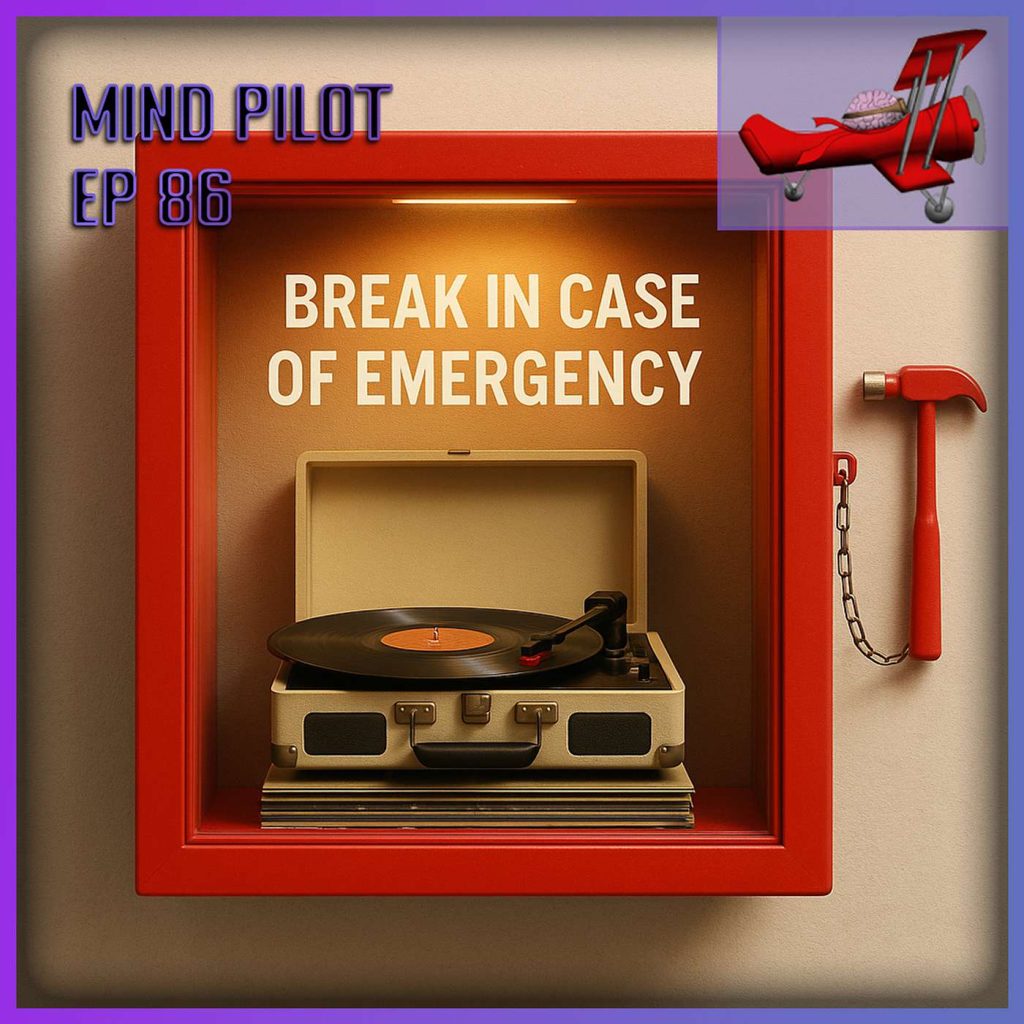
When you only have one way to cope, injury, schedule changes, or a moved away friend can leave you stranded. In this episode, Dr. Jana Price-Sharps teaches how to diversify your coping, pick strategies that truly lower anxiety, and avoid helpers that accidentally inflame it. You will hear why calling an anxious friend can escalate panic, how a glass of wine can turn into a bottle after a rough day, and what to try instead, from happy playlists and favorite photo albums to getting outside, mowing the lawn, fishing, or crafting. Use a simple three by five card to list five or six reliable options, then reach for it when your brain is spinning, so your body can recalibrate and your sleep, mood, and digestion improve.
Topics Covered
- COPING PORTFOLIO: Why one strategy is risky and how to diversify your calm
- SMART SUPPORT: How to choose centered friends and avoid anxiety amplifiers
- HEALTHY DISTRACTIONS: Music, photos, nature, hobbies, chores, and movement that reset the system
- STRESS AND BODY: How high stress fuels GERD, IBS, poor sleep, irritability, and what a daily plan can change
Episode Transcript
Good afternoon. This is This is Dr. Jana Price-Sharps with Mindpilot. Some of you may have money in the stock market. Do you put it all in one area? You might have, I don't know, different things that you buy. Do you only buy one thing? Do you only want buy one brand of food? When you go out, do you only go to one restaurant? Why am I asking you this? What I have found is that sometimes people have one coping strategy and they use it for everything. So maybe your coping strategy is when you get really depressed, you go drink. Maybe your coping strategy is you call your best friend. Maybe your coping strategy is you go play golf. And those well, with the exception of going and getting drunk, the other two are pretty good coping strategies. Until you're without that coping strategy. What if you get injured on the job? What if that friend moves away and you're not as close as you used to be? So I really want you to think about how do you deal with mental anxiety? People usually have some kind of strategy to deal with it. But is the strategy or strategies that you're using, are they working? Or are they making you even more anxious? Are they calming you down or giving you panic attacks? If you call a friend that's already anxious, and you're anxious, you're going to end up being a mess. Because that person may say things that are very unhelpful, like, oh my God, you're right, that's going to be terrible. And what if this happens? And oh my God. And then the anxiety explodes. You want to think about those anxious friends might be great friends when you're in a good mood and you're doing okay. Maybe they're not so great to reach out to when you're already spinning. Maybe having a glass of wine after dinner, maybe not a big deal. But maybe you had one of the worst days of your life at work, and you go home and you start drinking that glass of wine, and pretty soon you polished off a bottle. How do you cope with anxiety? What are some things that you can do? And I've talked about them in different podcasts, but it's really important because your brain is made differently than every other person's brain. So what works for me may not work for you, and that's okay. I happen to watch Old Westerns, probably doesn't work for most people. Maybe you watch comedy on TV. Maybe you go, I don't know, play a video game. Maybe you go golf. Maybe you go for a hike. Maybe you listen to happy music. Maybe you call a friend who's pretty centered and can talk you off the cliff. I would have at least three or four good coping strategies so that when life hits the fan, and it does, for almost everybody, in fact, I don't think I've ever met a person that didn't have some kind of major event in their life. What are you going to do? If you have a plan, you're going to walk through it much more effectively than if you just trust to luck. What distracts your mind? What calms your mind down? Some people go work in their shop. Some people go, I don't know, fishing. Some people crochet. Whatever it is you do, don't have that as the only skill. I tell people, take a three by five card and write out five or six things you can do to distract your brain that are effective. So that when life does hit the fan, you can pull that list down and go, oh yeah, yeah, okay, I could do this. Because otherwise, it's very easy to sit in it, isn't it? It's very easy to get more and more overwhelmed. And then the more overwhelmed you get, the more you spin, and the more you spin, the more angry you get. Your significant walks in, significant other walks in and says hi, and you blow up at them. Make a plan. The more you can make a plan for success, the happier you will be. And the happier you will be, the better your relationships will be. And the better your health will be. Do you ever just take a minute and turn on some happy music? Do you have an album on your phone of wonderful pictures, of trips you've taken or family photos, fun times? I tell people, turn on your good music on your phone and look at your album of fun things. Let your system cool back down. Distract your mind with the good. Distract the mind with things that are positive. Now, some people really struggle with distraction. So you're gonna get you're gonna have to get a little bit busier. You may not be able to just passively sit and listen to music. You may have to go do something outside. Maybe you need to go mow the lawn. I don't know. But distract your mind until your body can recalibrate. If you will do this, if you'll make a plan, the anxiety will quit being so overwhelming. And your system will begin to cool down. And that affects everything with your physical health. High stress, as we've talked about on this show before, acid reflux, right? Uh irritable bowel, GERD, waking up in the middle of the night, not being able to go back to sleep, waking up covered in sweat, waking up at the same time every night, being really, really irritable. All those things are related to high stress. So figure out a plan to reduce the stress. And if you continually do that, your body will function better and your mind will function better. You have the right to have a happy life. You have the right to take care of you. Make sure you're doing that. You take care of all of us and thank you for that. But you get to be taken care of as well. Take that five minutes and allow your system to cool back down. Your body will thank you, and so will your brain. Again, you have the right to have a happy life. You have the right to wake up happy. You take care. Thank you for joining me. I'm Dr. Jana Price-Sharps at Mind Pilot.