Have feed back, suggestions, or questions? CLICK HERE to Send us a Message.
Mind Pilot Episode 79
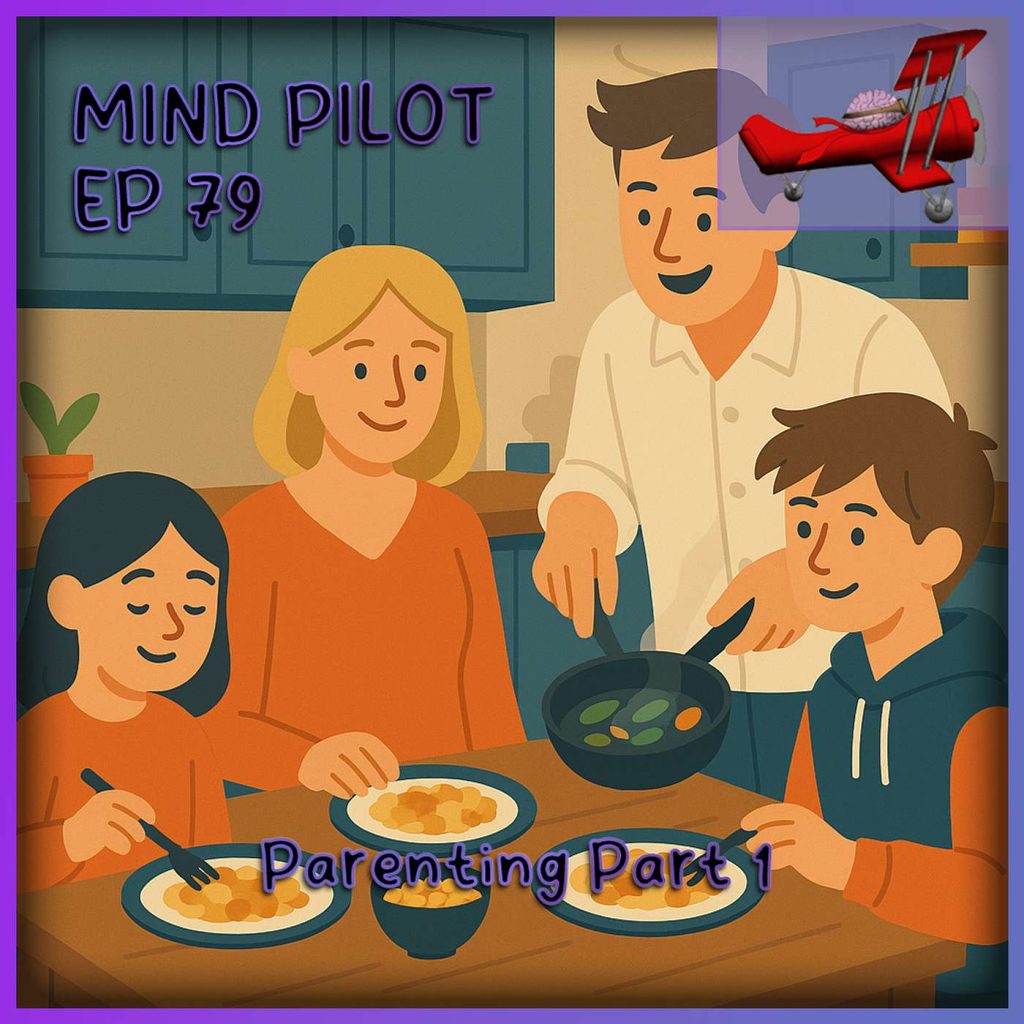
Parenting is tough—and it gets tougher when you're not on the same page with your partner. In Part 1 of this series, Dr. Jana Price-Sharps tackles the most common source of conflict in family life: parenting disagreements. Learn why united decision-making matters, how to teach kids critical thinking, and what modern dangers every parent should watch out for. With a blend of clinical research and practical tips, this episode is your first step toward calmer, more connected parenting.
Episode Transcript
Good day. This is This is Dr. Jana Price-Sharps from MindPilot. Today we're going to tackle the issue of parenting. That can be a difficult issue for many people. It causes or it tends to cause a lot of arguments in marriages and relationships, differences in ideas of what's okay, what isn't okay. So I'm just gonna talk a little bit about some things to think about as parents. The first one is that it's okay that parents have differences in ideas of parenting. Nobody is ever going to fully agree about exactly what to do with a child or a teen, you know, what's okay, what isn't okay. There's obviously some general rules uh that, you know, should probably be followed. A lot of screaming at a kid uh over time is gonna shut that kid down. And they are going to pick up, which is annoying, but they are going to pick up any habit we have as an adult. So if you scream a lot at your children, then your children are going to scream at other people, and then they're gonna grow up and scream at their spouses and significant others, and then they're gonna scream at their kids. So that's something to be aware of is that they are gonna model whatever you do. That old saying, don't do as I do, but do as I say, that doesn't work with a darn. They do exactly what you do and they ignore what you say. So just understand that. The second thing is that if you have differences in parenting, you need to work it out between the two of you rather than in front of the kid. So if one person thinks that the child or teen should be able to do X, and the other parent does not think that the child should do X, the two of you need to go into a different room out of earshot and figure it out. Don't try and do that in front of the child or the teen, because it's gonna undermine one of the parents. Whoever, whatever is decided ultimately, it can undermine the other parent who maybe was against that. So sort it out and then show that child or teen a united front. Any kind of big decisions, whenever possible, should be made with both of you, not just one of you. The child is gonna go towards the direction of least resistance. So if they know that a parent is usually gonna cave in, that's the parent they're going to ask. That parent to do effective parenting needs to say, I tell you what, I am going to talk to the mom or the dad, and we're gonna figure it out, and then we'll let you know. Now, kids are notorious for waiting to the last minute so that they can pressure you into decisions. Well, but I need to know right now. And so it's gonna be really important for you to say, well, you probably should have asked me sooner because you know that your dad and I, or your mom and I, need to talk about things like this. So since you didn't ask me, I guess you're not going to do that, right? Because otherwise, any direction that they can figure out that they can go to slip through the cracks, that's what they're gonna do. I have never known a kid not to do that. It's not any comment about whether your kid is bad or good, it's a comment about this is what kids do. And so be on the same page as parents. Now, I know that a lot of times first responders and veterans tend to be a little bit stricter or wanting more rules in the household. Now, we are living in an era where there are so many more dangers for kids than certainly when I was young, uh, but also when many of you were young. You know, we're in an age where kids can order fentanyl while sitting beside you on the couch uh from their cell phone. Um so it's a different world. And, you know, there's these apps that young people get on and then they hook up with somebody they've never met, and it turns out to be, you know, somebody who's very unethical and basically a sexual predator. You know, so those are things that, you know, in our wildest imagination wouldn't have happened when I was a kid and probably didn't happen when you were a kid either. So it's it's an era where coming down on the side of being careful is probably a better option. Now I'm not saying you, you know, keep the kid in the house and they can never go anywhere. That isn't what I'm saying. But I am saying, you know, it's better to err on the side of caution. I want you to think just a minute about what your role is as a parent. Your role and your goal needs to be that you teach this young person how to survive as an adult, how to make good decisions. What does a decision-making process look like? Why are you telling them no? Now it does no good to try and reason that out with a four-year-old. Four-year-olds cognitively are not going to get it. They're not many adults, and they, you know, you can try and have a discussion with them, and they may look like they're understanding what you're saying, but most of the time they don't have a clue. Just tell them no and move on and go, look, over here, that's shiny. Let's look at that, and then off they go. But as far as the nine-year-old and 10-year-old and 15-year-old, when you tell them no, tell them why you are telling them no. I'm not saying that you have to explain yourself to your kids, but you're teaching your kids a decision-making process. When they leave home, as most of them will, they're going to have to understand the thought process of why you got to know. That way they know how to make good decisions. If you don't teach them that process and you just say, because I said no, and they're 13, then when they leave, they don't have that process in place of, oh, it's because I have a test tomorrow, and if I go over to my friend's house, I'm going to stay up until two in the morning. I'm not going to study, and then I'm going to flunk my exam. Now that's important information when they get into college, because otherwise they go out with their friends the night before the test and they don't study because they've never gone through that decision making or thought process. So that's an important thing to help the kid to begin to understand. The other thing is don't undermine the other parent. If one parent is telling them no, don't come behind them and say, well, I think you're being too strict, the answer is yes, or vice versa. I don't think you're being strict and strict enough, you know, so no, the person can't go. Don't, don't undermine the other parent. When you do that, you're effectively telling the kid that that parent has no rights to parent, and that's a real problem. The other thing is to be able to kind of talk about a long-term strategy of parenting. When is it okay for the kid to go stay at somebody's house overnight? Uh, how do you determine whose house that they can stay overnight at? Uh, do you know your kid's friends and their parents? That's a really important piece to the puzzle. Uh, do you know where your kid is going on a Friday night? Do they just walk out of the house and say, bye, see you later? Or do you go, no, where are you going? When are you going to be home? The more, I'm not saying you, you know, make it so rigid that they can never go anywhere, but the more you have that communication, the safer your kid is going to be. So have that communication and decide that early on about what's going to be acceptable, what isn't going to be acceptable in terms of that kind of behavior. The other thing is there's some really pretty interesting research on what prevents uh juvenile delinquency or delinquent kind of behavior. The number one thing is school involvement. So whether that means they're on the chess team, are they in FFA, are they, you know, in a sport, you know, are they in the choir? Are they in band? You know, the more kids have school involvement, the less likely they are to get involved in delinquent behavior. Now, why might that be? Well, because they have a bunch of other friends. It's an immediate friendship group because if you're in choir or you're in band or in sports, you become friends with those people. And also typically there is a uh some kind of grade structure where if you fall before below a C average, you can't participate, that kind of thing. So that helps in the whole parenting and making sure the kids' grades are are being maintained. But the other thing is it it fills up some of their free time. You know, when you have kids that have lots of free time and very little structure, some kids do just fine with that. Other kids start hanging out with other people that have a lot of free time. And some of those people are smoking dope and, you know, dropping out of schools. So helping them to have good friendships that are with solid people that are also maintaining their GPAs is a very good idea. Interestingly enough, the other thing that seems to be very helpful to prevent delinquent behavior is having dinner together. Now, I know for first responder families and people in the military, that isn't always possible with everybody. But when it is possible, that is a really good idea. And if you do have somebody that is gone on a regular basis, the parent that is the primary caretaker, have dinner with everybody. It gives you a chance to say, how was your day at school? How did this go? I know you had a math test, how was that? You know, and that's when kids feel more comfortable to say, you know, I'm really struggling in math. Okay, so maybe you can get that kid a math tutor. I don't know. But it gives you the opportunity to problem solve. Kids might bring up that they're being bullied, and so there might be something that you need to do to step in as a parent. Um, that open communication is so important with your kids. And so often people get busy and they forget to check in with their kid. I see this all the time. I'll go to a restaurant with my husband, and there'll be a table with like four or five people there, and several kids and the parents, and everybody's on their cell phone and nobody's talking. And I'm thinking that's a perfect opportunity for the parents to be talking to the kids. How are you doing? Are you having a good time at school? How is the football going or the chess team or FFA or whatever? You know, it's a way to keep that communication open so that the kid is turning to you for advice, not their friends who may not always have the best advice. And the last one, and this it can be a little controversial for parents, but I tell parents you need to look at their phone, um, you know, and and let them know that you're doing it. But um say, hey, can I look at your phone and see what they're looking at on face uh Facebook or uh whatever app they're using. Is it YouTube, is it Instagram, is it, you know, whatever they're using, and kind of look and see what they're interested in. And it also kind of keeps the kid above board. Now, there's ways of getting around it, and I understand that, but it's really important to keep that open dialogue uh when you can. So I hope this is helpful. One last comment. If there is a divorce happening or a breakup is happening, as mad as you might be at the other person, the research is very clear. Kids go through divorces just fine if the parents don't put the kids in the middle of the divorce. You know, they may not like it, it may be difficult from time to time, but if the parents co-parent and don't talk negatively about the other parent, the kids do just fine. When the kids are put in between the parents and one parent's, you know, talking badly about the other parent and vice versa, that causes massive stress for kids. So as much as you may not like your ex, don't bring the kid into that. Don't talk to them about the other parent, don't belittle the other parent, even if the other parent is less than perfect, but because that's going to stress your kid. So keep them out of the divorce or the breakup and keep the line of communication open about how they may be feeling about it, but don't weigh in about your thoughts about the other person. I hope this was helpful. I think that parenting is one of the biggest responsibilities we have, and not that I know of. Nobody was born with a handbook that says, if your kid does this, do that, please. You know, so a lot of us are doing it almost hoping to God that it all works out somehow. So good luck. And there are a lot of parenting resources out there, so you might look at some of those. Uh, but you have the right to have a happy life. You have a right to have a relationship that is healthy and happy, and you have the right to take care of yourself. So I hope this is helpful, and I hope you have a wonderful day. Thank you. This is Dr. Jana Price-Sharps and MindPilot.