Have feed back, suggestions, or questions? CLICK HERE to Send us a Message.
Mind Pilot Episode 65
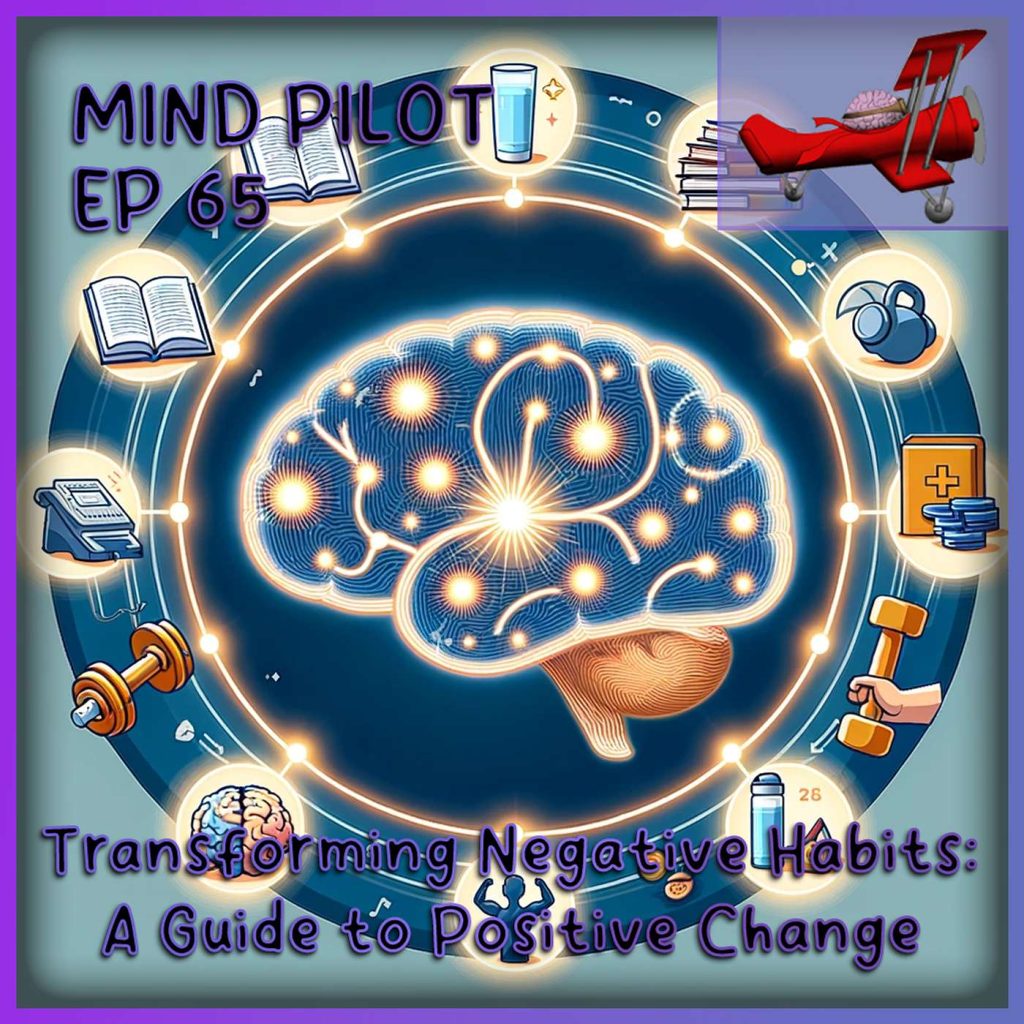
Join Dr. Jana Price-Sharps as she delves into the concept of brain traces and their profound impact on our daily lives. Understand how repetitive behaviors create lasting habits and gain insights on how to replace detrimental patterns with positive ones for improved mental well-being. This video offers a comprehensive approach to self-improvement, emphasizing the importance of mindful self-awareness and deliberate change.
Topics Covered:
- BRAIN TRACES: Understanding the concept and how they shape our behaviors.
- NEGATIVE PATTERNS: Identifying and breaking detrimental habits.
- POSITIVE REINFORCEMENT: Techniques to build and strengthen beneficial habits.
- GRADUAL CHANGE: Implementing small, manageable steps for lasting improvement.
Episode Transcript
Good day. This is Dr. Jana Price-Sharps from MindPilot. I want to ask you a question. We've discussed brain traces on this program with Dr. Matthew Sharps. And those effectively are our habits, our memories. There's a lot more to it than that, but the more you go over something, the deeper the brain trace. That's why you study for tests, right? You go over and over the material. So the more you go over something, the more that becomes your primary mode of operations. So I don't know, if every time you get really mad, you scream, you yell, you slam doors, well, that becomes your ongoing habit pattern. And the more you do it, the more that becomes your habit pattern. So it's kind of circular, right? You do it, it reinforces it, it becomes a deeper brain trace, and then you do it again. So today I want you to take a step back and ask yourself, kind of looking at your whole life, what brain traces are you strengthening or or even making today that are really helping you? And what brain traces are you making or strengthening that are causing you problems? If you get used to always being angry and upset and yelling, then that's probably what you're going to continue doing. Our mind very much looks for habit patterns and it basically effectively says, Oh, I know what to do in this circumstance. We do this. So you'll hear people describe themselves, and really what they're doing is they're just reinforcing those brain traces. Yeah, I have a bad temper. Yeah, I procrastinate. Yeah, I can't save money. Yeah, I never eat well, I always eat junk food, or I always break things when I'm mad, or I'm super jealous, or I am I don't trust anybody and I'm never going to get close to anybody. All of those kinds of statements reinforce behavior and responses to the world. So I want you to think about, we've talked about self-talk, but this is just a little bit different way of thinking about it because it's so important. What are you reinforcing and what should you be reinforcing? Take that step back, take out a piece of paper, write down the things that you're reinforcing, good or bad. Okay. Write down how you're reinforcing them, and then put a star by those that you want to change. And most people try and do radical changes with this. Don't try and do that, because when you try and do that, people get very overwhelmed and then they give up and they go, see, I knew I couldn't do this anyway. Take one small thing. I'm gonna use water as an example just because it's an easy one to think about. You might think, I need to drink more water. Okay, so tomorrow, think about what glass you're gonna put your water in. Are you gonna have a carry cup or uh, you know, and which cup? If it's, you know, it's a like a metal cup or something that you're gonna carry with you. Do you have one? Do you have a good one? Do you like ice water? Do you like room temperature water? Do you like water with lemon in it? Do you like water with, I don't know, some fruit in it? What do you like and what will increase your water intake? I played this with around with this for years because I really hate warm water. I will drink it. I don't mind hot water for like tea, but room temperature water, I just won't drink it. I will carry it around with me and I just won't drink it. So I had to find a way to get water into me. So I started drinking ice water. Well, then I had a cup that wasn't great with ice water because the ice it all melts. So by the afternoon, I wasn't drinking it again. So I went and got a more expensive cup, and now I have ice water all day and I can drink it all day. So that is what I'm talking about. Play with the problem, play with it and think about how you can best resolve this, then make a plan to do that. But don't keep reinforcing those negative brain traces that are causing you problems. If you know you have a bad temper, learn to walk away. Learn what part of your body starts to tense up before you open your mouth, right? If you know you have a spending problem, put yourself on a budget. Maybe you only allow yourself to have cash. Maybe you only carry one credit card that has a low limit on it. So that, you know, it maybe you like to gamble. And so that that is the amount that you have. Figure out a solution. Don't just let the behavior go on and on so that it gets worse and worse, because that's what it'll do, right? People gamble, then they lose a bunch of money, then they feel guilty, and then they feel miserable. Well, what do you do when you feel miserable? If your coping mechanism is gambling and you're feeling miserable, guess what you're gonna go do? You're gonna go gamble. If you smoke a bunch of weed and that's what you do when you're upset, then you're gonna go smoke weed, or you're gonna go drink, or you're gonna go have random sex, or whatever it is you do that maybe is not working well in your life. So make that list of what brain traces you're reinforcing, and then ask yourself, which of these do I want to keep? And which of these do I need to get rid of? And then the ones you need to get rid of, make a plan. Now, when I say that, everybody's like, well, Jenna, it's just not that easy. And I get that. I get that. Change happens over time. It doesn't typically happen today. You can change it today, but it doesn't mean that it's easy every day. Your system may fight it for a bit. But if you have a plan and you go, okay, this is what I'm going to do, and this is how I'm going to do it, and sometimes this is how I'm going to reward myself, you will find that you begin to change. Now, in a lot of military um personnel and first responders talk about perishable skills. And unfortunately, mental health is a perishable skill. It just is. And what does that mean? I have people all the time, myself included, where I go, why aren't things working as well as I thought they should? And then you suddenly realize, oh yeah, I haven't been doing this or I haven't been doing that. Why haven't I been doing this? And you realize that you've gotten away from that habit and you've gone back to some of those old brain traces. Because those brain traces are still there. You know, that's where the kind of the adage of if you ever, you know, rode a bicycle when you were younger, you know, it's much easier to learn it again, right? Those brain traces are still there. So if you're not careful, it is easy to go back to those old behaviors. So monitor what you're doing. Check in with yourself weekly, look at that list of behaviors that you want to change and ask yourself, how am I doing on these? Take one at a time. But when you get to the whole list and you feel like you have a pretty good handle on it, look at that list at least monthly, if not weekly, and go, how am I doing? Am I staying up with this? And am I still drinking water or whatever, exercising or talking to my spouse or whatever it is you want to do? Ask yourself, do I have any brain traces that I'm developing that I don't mean to be that I need to stop? If you'll do that on a regular basis, you will have a happier life. Because you deserve to be happy. You deserve to have a good life. So figure it out, folks, because you have good brains. You're great problem solvers. Use those brains to fix those brain traces. Start developing those habits that you want, and you will have a better life. Thank you for joining me today. This is Dr. Jana Price-Sharps.