Have feed back, suggestions, or questions? CLICK HERE to Send us a Message.
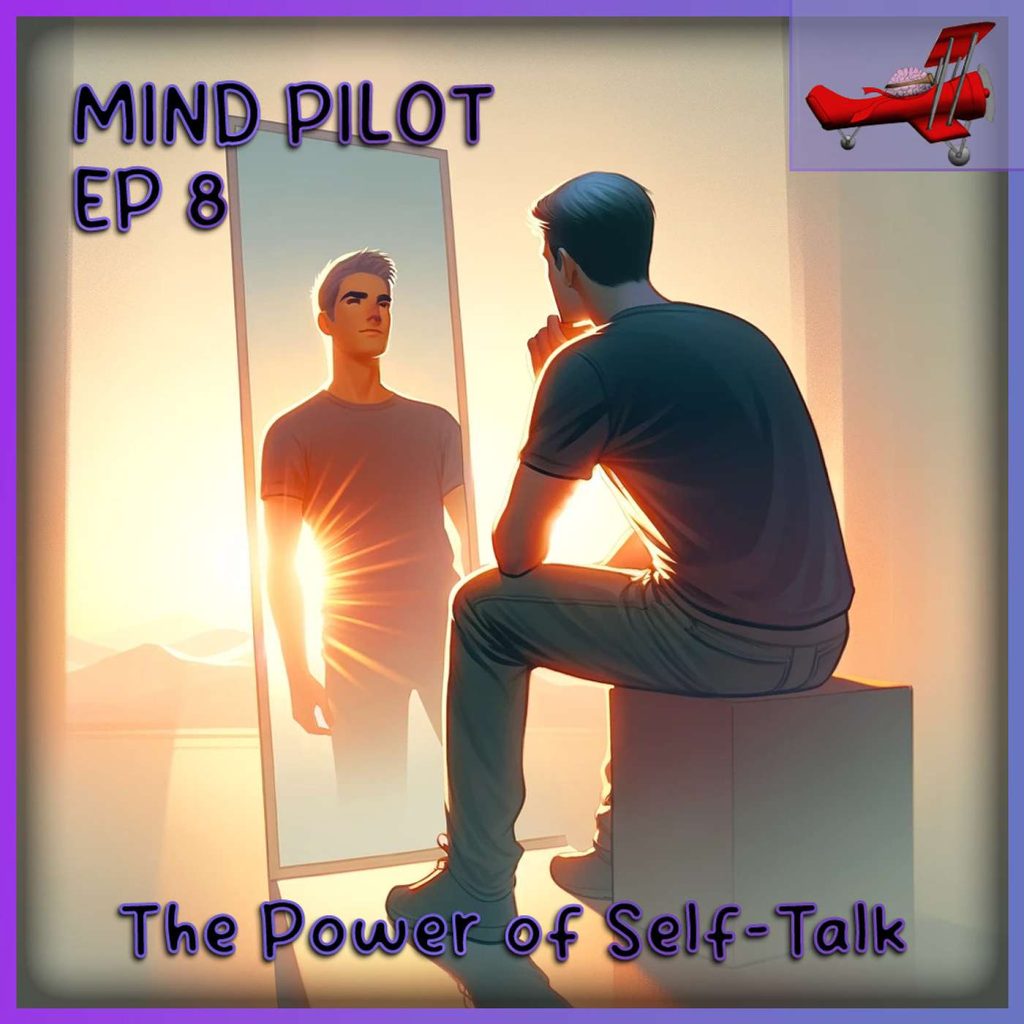
Mind Pilot Episode 8
Tune in to this thought-provoking episode of Mind Pilot with Dr. Jana Price-Sharp as we delve into the profound impact of self-talk on our lives. From our personal mood to the outcomes we manifest, the constant inner monologue we entertain shapes our realities in unexpected ways. Dr. Jana explores the origins of our internal scripts, drawing on insights from renowned author Shad Helmstetter and sharing compelling real-life examples. She challenges listeners to examine and transform their self-talk, emphasizing its role in driving behaviors, relationships, and even career paths. Whether you're a first responder grappling with the pressures of the job or someone struggling with negative patterns of thought, this episode is a crucial step toward reprogramming the narratives that dictate your life. Discover how to replace a monologue of self-doubt with affirmations of capability and resilience. It's not just motivational talk; it's a blueprint for a mindset overhaul that could redefine your destiny. #SelfTalk #MindsetChange #PersonalGrowth #MindPilot
Topics Covered
- The Concept of Self-Talk: Exploring how our internal monologue affects our mood, behaviors, and life outcomes.
- Origins of Self-Dialogue: Understanding how early influences shape our self-talk, with insights from Shad Helmstetter's work.
- Real-Life Impact of Self-Talk: Analyzing true stories that illustrate the power of self-talk, including a life-changing realization related to suicidal thoughts.
- Changing Your Inner Script: Strategies for transforming negative self-talk into empowering affirmations to improve one's personal and professional life.
Books mentioned
- What to Say When You Talk to Your Self
- Shad Helmstetter
Episode Transcript
Welcome to Mindpilot. This is Dr. Jana Price Sharps. Thank you for joining me today. Today I'm gonna talk about self-talk. And that sounds very, I don't know, maybe I guess some of my guys would say kumbaya. But hear me out before you discount this. When you think about our life in general, day to day, all we do is talk to ourselves. I mean, we talk to other people as well, but think about how much dialogue or actually monologue we have. Oh, you know what? I gotta remember to uh pick up some bread at the store. Oh, I gotta get gas. Gosh, I forgot to get gas. Oh, yeah, I've got to get that memo out. You know, that kind of ongoing monologue that all of us have. You may not have paid attention to it, but you know what? It's driving your mood, it's driving your behavior, it's driving your relationships, it's really driving everything that you do. Your relationship with yourself is going to drive your day-to-day interactions. So the first step in deciding whether you have healthy self-talk or not is to really start listening to what it is you're saying to yourself. A lot of self-talk is developed early on. There is a great uh writer, I'm very partial to him, his name is Shad Helmstedter, and he talks a lot about self-talk. But one of the things that he said in one of his books called Um What to Say to Yourself is he said, picture a little kid having a um a keyboard hooked into their brain, and people just keep coming up randomly and typing stuff in on that keyboard, and it's going directly into that kid's brains. Because as a kid, we really don't have the filter. You know, if somebody, if mom says you're stupid, we don't have a filter that says, yes, mother, but you're a drug addict, please go away. We don't have that filter. If our our third grade teacher says, Well, it's just stupid to go to graduate school, you're gonna be dumb and you're never gonna go to college. We don't filter that out. And so all that stuff that it's like people just keep typing that stuff in there. And so a lot of times that stuff becomes part of our monologue. I remember I had this wonderful man, and he told me that his fifth grade teacher had told him that he was stupid and he would never go to college. And I said, Well, first of all, you're not stupid, and if you want to go to college, you can. He now has his doctorate. But see, that that script, that self-talk, uh was going on in the back of his mind, and it was directing his behavior. It was directing how he saw himself in school, it was directing himself or his his um ability to function in school, it directed everything about him until he started changing that self-talk, right? Whatever we're saying to ourselves is probably going to come true. If you're saying to yourself, you know what, I'm never gonna get along with my family, I'm probably gonna end up being divorced. Well, good bet, you know, and when you look at even the statistics of people that are in prison, um, there's been a number of studies done on this, and the and the estimate is about 85% of the people in prison have repeatedly been told that they were gonna be in prison. Well, you know, if your mom tells you that and your grandmother tells you that, your grandfather tells you that, and your aunts and uncles tell you that, et cetera, et cetera, you're probably gonna end up in prison unless you change that script, unless you change what it is you're saying to yourself. And so what are you saying to yourself? Are you telling yourself that you're a good father or a good mother? Are you telling yourself that you're a good employee? Are you telling yourself that you're smart? Are you telling yourself that you're capable? Or are you on an ongoing monologue of just hatred? You know, I'm stupid, I'm never gonna get anything right, I'm always gonna, you know, make my family mad, I'm always gonna yell, I always lose my temper, I always, I always, I always, I always there's a negative, negative monologue. And boy, does that really influence not only how you're feeling about yourself, but how you're gonna react to the world. Because your brain is gonna take that information and go, oh, okay, I guess I'm not any good at this. I guess I'm not any good at this, I guess I'm not capable of this. You're really, it's almost, we're not computers, but it's almost like you are typing in instructions and it's now going to run the program. So what program are you running? Are you running one where you're capable, you're gonna be successful, you're gonna have a happy life? Or are you like many of my first responders, go, well, you know what? Hopefully I get to retirement and I'll probably die in a couple years after that. I can't tell you how many first responders have said that to me. How many first responders do I know? And you're gonna hear me say this over and over. Those of you who have laptops or you have iPads and and the counter is running, and you can tell me, well, when are you gonna retire? 10, 10 years, two months, three days, five hours, right? It's like you're waiting to retire. And what is the the monologue that goes with that? I'm not gonna have uh have any any happiness at work. I'm just gonna be miserable. I just have to endure this. I need I want the retirement. I want the insurance, so I guess I just have to go to work one more day. And I'm not saying run out and and give up your job. That isn't what I'm saying. What I am saying, though, is what are you telling yourself about the job? What are you telling yourself about your rights to be happy? What are you telling yourself about your day? Are you waking up and going, oh God, it's another day and this job sucks? Or are you waking up and going, huh, I wonder what will happen today? But whatever it is, I I'll be able to handle it. You know, and and that sounds just so trite, but I tell you, those statements that we say to ourselves, they stay in the brain and they really do influence our behavior. Uh, years ago, I met a lady who was really struggling. She came in to see me and she was extremely suicidal. And she couldn't figure out why. And quite frankly, I couldn't figure out why either. She uh was not depressed that I could tell. She had a good marriage, she had a good job, she her finances were stable, her health was good, uh, she had a good relationship with her husband and her and her daughter. And uh, so I I was I said, I'm not sure what's going on with you. And and I said, What is you know going on in your life right now? And she goes, Well, you know, nothing. My daughter's about ready to turn 18. We're putting together a great birthday party for her. But other than that, you know, I'm just going to work and things are good at work and things are good at home. And I don't know, but I can't stop thinking about suicide. And I said, Huh, well, so I sent her to get a medical checkup because I thought, okay, maybe, I don't know, maybe this is a thyroid issue or something like that, because I really couldn't explain it. And uh, she came back with a clean bill of health, and I said, huh. And I thought, you know, I wonder if this has ever happened before. So I asked her, I said, have there ever been a time in your life when you were suicidal? And she goes, No, no, I don't think so. And I said, think back at maybe it was years ago. And she was thinking and thinking, and then she goes, Oh my gosh, yeah, there was, but it was years ago. And I said, What was going on at that time? And she goes, Well, I was in a bad divorce. And uh, she said, I uh it was just terrible. And, you know, the police were involved and restraining orders were involved, and she goes, I just, I felt so hopeless, and and I I really did feel suicidal. And I said, What kept you from committing suicide? And she says, Well, you know, I just I knew I, you know, my daughter, I didn't want her with her dad, and because he was abusive, and so I just kept telling myself, you know, over and over that I had to stay alive. And I said, Okay, was that helpful? And she goes, Well, it kept me alive. And I said, What exactly did you say to yourself? And she said, I kept saying, uh, I need to stay alive until she turns 18. And I said, When is your daughter turning 18? And she says, A month from now. And she goes, Oh my God, this whole time that script has been running. Oh my gosh. And I said, hmm. I said, Do you think you can let yourself live? And she and she just started crying and she goes, Oh my gosh, I don't have to die. I'm gonna be okay. I don't have to kill myself. That script had been running in her mind for 15 years. What we say to ourselves is very important. It may not seem like a big deal, but it is a huge deal. If you're in the middle of a discussion with, I don't know, a supervisor, and they're saying things that you disagree with, if you're sitting there in your mind going, I should just quit this job, this is just a stupid person. I can't believe and you're getting angrier and angrier, you're letting out more and more adrenaline more and more cortisol, going more into fight or flight, getting more and more irritated, your frontal cortex is activity is diminishing, and now you're gonna say something that you're gonna regret if you're not careful. But what if you said, hmm, well, I disagree with this person, but they're in charge. They're not asking me to do something unethical. So, you know what? I get paid the same whether I do it their way or my way. I'm gonna do it their way, because their way isn't gonna get anybody killed. So I'm just gonna do it. That's their problem and that's their responsibility. I'm just gonna go do my job. It doesn't mean you're gonna be happy about it. It doesn't mean you're gonna be going, oh my gosh, this person is so wonderful. But it does mean you're not full of adrenaline and full of cortisol, which is affecting your entire health of your body. You and I get to choose. We get to choose how we respond to different situations. We get to uh choose how we respond to our spouses, our significant others, our kids, our superiors. We get to choose our response. But to do that, you have to be very aware of your self-talk. What are you saying to yourself? Are you amping yourself up or are you calming yourself down? Are you taking trying to take control of things that are out of your power? Or are you deciding they're out of your power and letting go of them? Think about your self-talk. And where you start is you start writing down some of the things that you're saying to yourself that are driving your mood. Are you calling yourself names? Are you putting yourself down? Are you building yourself up? Think about it. Because you know what? You have the right to enjoy life. You don't have to just endure it. I hope this was helpful. Thank you so much for joining me. This is Dr. Jana Price-Sharps with Mind MindPilot.